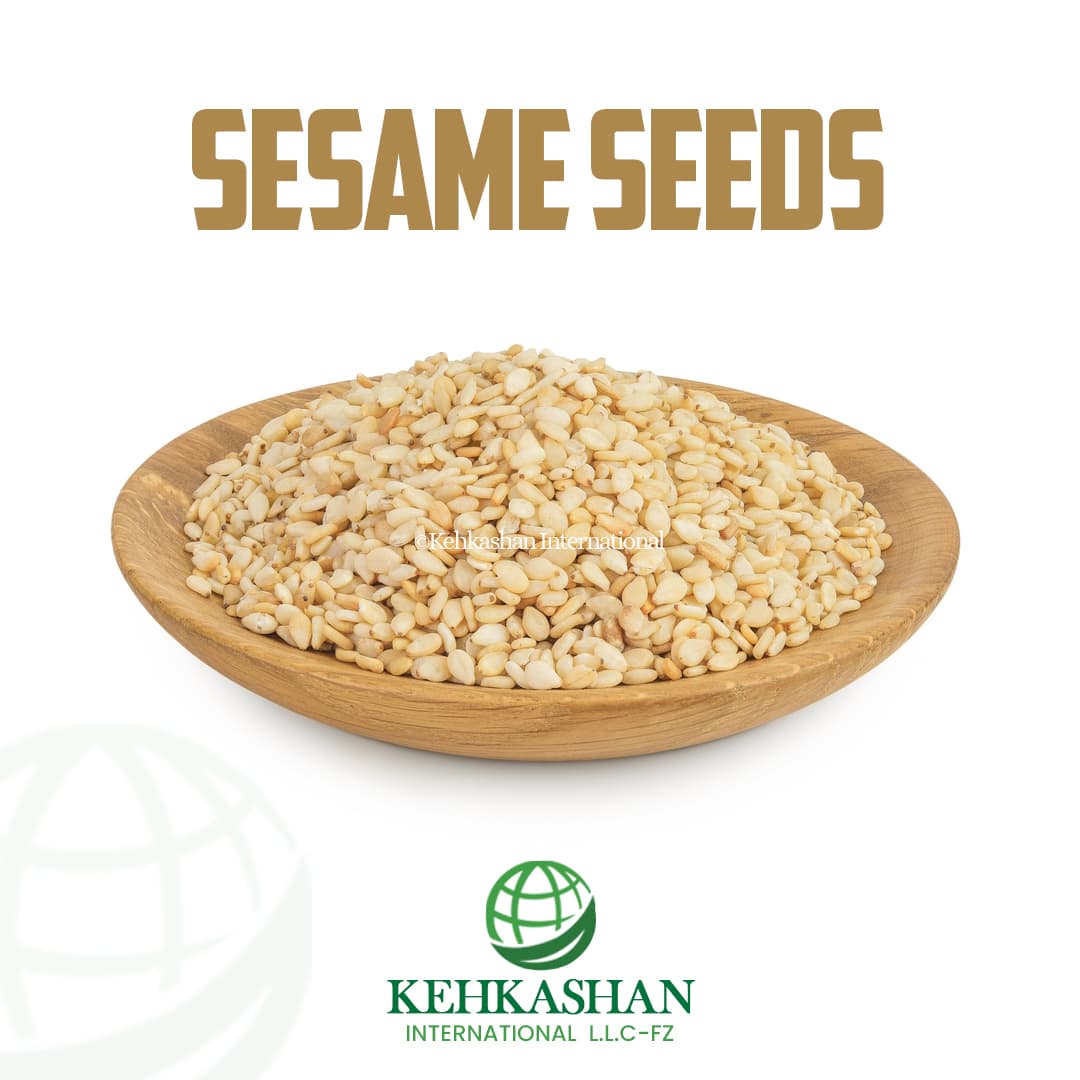
Sortex-grade sesame seeds are scored by optical-sorter rejection tier: 99 percent removes most discoloured seed, 99.5 percent removes most foreign matter, 99.95 percent delivers near-zero impurity. The grade choice typically moves landed cost by 10 to 25 percent FOB.
What "Sortex" actually means
Sortex is the trade name for optical color-sorting machinery manufactured by Bühler (formerly Sortex Limited, London). In sesame trading the word has become a generic noun: a "Sortex-graded" lot means a lot that has passed through a multi-channel optical sorter that rejects discoloured seeds, stones, plant material, and foreign-color impurities by measuring reflectance against calibrated optical thresholds. Other manufacturers — Satake, Tomra, Anysort — make equivalent machinery, but the trade language remains "Sortex".
The grade tier is not a measure of variety, origin, or oil content. It is a measure of how aggressively the optical sorter was set, and how many passes the lot received. A 99.95 percent Sortex-graded lot has typically been through three sorter passes; a 99 percent lot has been through one.
Grade tiers — what each means physically
99 percent Sortex. The base export tier. Permits up to 1 percent total impurity by weight, of which: discoloured or off-color seed not exceeding 0.5 percent, foreign matter (stones, plant material, other seeds) not exceeding 0.3 percent, and admixture (other sesame variety, e.g., natural mixed into white) not exceeding 0.2 percent. Acceptable for industrial bakery and tahini-blending operations where downstream cleaning continues at the buyer's plant.
99.5 percent Sortex. The standard food-grade tier. Permits up to 0.5 percent total impurity. Discoloured seed below 0.25 percent; foreign matter below 0.15 percent; admixture below 0.1 percent. Acceptable for branded tahini, sesame oil pressing, and household-pack bakery sesame.
99.95 percent Sortex. The premium tier. Permits up to 0.05 percent total impurity. Discoloured seed below 0.025 percent; foreign matter effectively negligible; admixture below 0.025 percent. Required for confectionery-grade sesame, hulled-sesame end-product packaging, and any application where the seed appears whole on the finished product.
A buyer specifying "99.95 percent Sortex" without the underlying impurity-component breakdown leaves themselves exposed. The contract must list the four sub-components — discoloured seed, foreign matter, admixture, broken seed — with their individual maxima. Many disputes between sesame buyers and traders trace to ambiguous Sortex specifications that disagree on which component drives the headline percentage.
Color and character grading
Sesame is sold by color and by hulled-versus-natural state, independently of the Sortex grade.
White natural — the dominant export color, characteristic of Indian, Pakistani, and Sudanese material. White natural is the baseline for tahini and bakery use. Grain size varies by origin, with Indian Tier-1 whites typically 2.8 to 3.2 mm.
Hulled white — mechanically hulled in dedicated lines, principally in India (Gujarat, Tamil Nadu) and increasingly in Türkiye. Hulled sesame is the visible whole seed on burger buns and confectionery; the Sortex grade matters most acutely here because every seed is visible on the finished product.
Natural brown — unhulled brown-coated sesame from Ethiopian Humera region, Sudan (Gedaref), and parts of Nigeria. Used for sesame oil pressing where higher oil content (50 to 53 percent) and a roasted-flavour profile are positive.
Black sesame — niche but valuable. Indian and Chinese black sesame is used in confectionery and East Asian cuisine. Smaller global volume; specifications are tighter on visual uniformity.
Pricing premium per grade tier
The price step between tiers is non-linear. Moving from 99 percent to 99.5 percent typically adds 5 to 12 percent to the FOB price; moving from 99.5 percent to 99.95 percent adds another 8 to 15 percent. A buyer specifying 99.95 percent versus 99 percent therefore pays roughly 15 to 25 percent more on FOB before adding any quality-related freight or handling differentials.
The margin question on the buyer side is whether downstream cleaning at the buyer's plant is more or less economic than buying a higher Sortex tier. Industrial buyers with their own optical-sorting line generally buy 99 or 99.5 percent and finish in-house; pure trading buyers without sorting capacity buy 99.95 percent and sell on without further processing.
Origin notes — Ethiopia, Sudan, Nigeria, India
Ethiopia (Humera, Wollega, Gondar). Humera-region whitish natural is the Ethiopian flagship, with grain size 2.6 to 3.0 mm and oil content 49 to 52 percent. Wollega and Gondar are smaller-volume regions producing mixed-color material. Ethiopian export specs commonly list "Whitish Humera" as the variety designation; insist on the specific region name on the COA, not just "Ethiopian whitish".
Sudan (Gedaref, Kassala, Sennar). Sudanese sesame is principally white natural with significant brown-mixed lots from Gedaref. Grain size 2.6 to 2.8 mm; oil content 47 to 50 percent. Sudanese material has historically commanded a small price discount versus Humera due to less consistent cleaning at origin.
Nigeria (Benue, Nasarawa, Kano). Nigerian sesame is a high-volume origin with mixed-color natural lots. Quality and consistency vary by exporter; Kehkashan's preference is for Lagos-port shippers with in-house Sortex cleaning. Grain size 2.4 to 2.8 mm.
India (Gujarat, Tamil Nadu, Madhya Pradesh). India is the dominant origin for hulled-sesame export and supplies natural-white volume to Middle Eastern tahini buyers. Indian hulled lines run in Mundra and Tuticorin. Grain size for hulled is 2.8 to 3.2 mm. Oil content for natural is 47 to 50 percent. HS code for sesame seeds is 1207.40 — see ITC Trade Map for sesame import-export flows.
Spec sheet template
A working FOB or CFR sesame contract should specify, at minimum:
| Field | Example specification |
|---|---|
| Crop year | 2025/26 |
| Variety designation | Whitish Humera (Ethiopia) |
| Color | White natural |
| State | Unhulled |
| Sortex grade | 99.95% |
| Discoloured seed, max | 0.025% |
| Foreign matter, max | 0.01% |
| Admixture, max | 0.025% |
| Broken seed, max | 0.5% |
| Moisture, max | 6% |
| Free fatty acid, max | 1.5% |
| Oil content, min | 50% |
| Aflatoxin B1, max | 2 ppb |
| Aflatoxin total, max | 4 ppb |
| Pesticide residue | EU MRL compliant |
| Pack | 25 kg PP woven bag, palletised |
The aflatoxin parameters are particularly important for EU and Japanese buyers; African-origin sesame requires routine testing and rejection of any lot exceeding the limits.
FAQ
What's the difference between 99% and 99.95% Sortex sesame?
99 percent permits up to 1 percent total impurity (discoloured seed, foreign matter, admixture combined); 99.95 percent permits up to 0.05 percent. The headline-percentage difference of 0.95 points represents a roughly 20-fold improvement in cleanliness and a 15-to-25 percent FOB price premium.
Which origin produces the highest oil-content sesame?
Ethiopian Humera-region whitish natural typically tests 49 to 52 percent oil content — among the highest in international trade. Indian and Sudanese white naturals are 47 to 50 percent.
What does "hulled sesame" mean?
Hulled sesame is sesame seed that has had its outer seed coat mechanically removed in a dedicated hulling line. Hulled sesame is the white whole seed visible on burger buns and confectionery products.
Why does the buyer's contract need to list each impurity sub-component?
A "99.95 percent Sortex" headline figure is ambiguous because the 0.05 percent ceiling can be allocated differently between discoloured seed, foreign matter, admixture, and broken seed. Listing each sub-component with its own maximum prevents disputes at destination on a lot that meets the headline but fails on a single category.
What aflatoxin limits apply to sesame imports?
EU buyers require Aflatoxin B1 not exceeding 2 ppb and total aflatoxin not exceeding 4 ppb under Regulation 1881/2006. Japanese buyers apply similar limits with regional variation. African-origin sesame requires routine pre-shipment testing because aflatoxin contamination is a documented risk in tropical-storage conditions.
How buyers reconcile the Sortex spec with their own cleaning capacity
Industrial sesame buyers fall into three categories that drive the Sortex specification differently. Tahini and oil-pressing operations with their own optical-sorter and gravity-separator lines typically buy 99 or 99.5 percent Sortex material and do their final cleaning in-house. The economics favour this because their capital-installed sorter has near-zero marginal cost per kilogram once amortised, and the FOB discount on 99 percent versus 99.95 percent material covers their in-house cleaning loss multiple times over.
Confectionery and bakery buyers without in-house sorting typically buy 99.95 percent Sortex material and use it directly. The headline FOB premium is real, but their alternative — installing a Bühler or Tomra line for 250,000 to 500,000 USD plus operating cost — is uneconomic at their throughput. For these buyers, the spec premium is a make-versus-buy decision in favour of buying.
Trading-house and re-export buyers without end-use processing buy at the spec their downstream buyer requires, and add a margin. Here the Sortex tier is a throughput question rather than a margin question; the trader simply matches buyer specification to seller specification and charges for the consolidation, financing, and documentation work in between.
Crop-year and origin-blending considerations
Sesame is an annual crop with distinct production cycles by origin: Indian Kharif (October-November harvest), Sudanese and Ethiopian (October-December), Nigerian (November-December). Buyers running year-round consumption pull from current crop in Q4 and Q1, switching to carryover stock in Q2 and Q3 when current-crop is depleted. Carryover material is typically priced at a 4 to 8 percent discount to current crop and is acceptable for non-visual end uses but should be moisture-tested on receipt.
Origin blending — combining lots from two origins to hit a target spec — is technically straightforward and operationally common. A buyer specifying "white sesame, 99.95 percent Sortex, 50 percent oil minimum" might receive a blend of Indian Mundra-cleaned natural white at 49 percent oil and Ethiopian Humera at 51 percent oil that averages to spec. The contract should explicitly authorise blending if the buyer wants the cost benefit; an unblended single-origin lot at the same headline spec will price 6 to 12 percent higher.
Pre-shipment inspection — what a buyer should commission
For sesame contracts above 25 MT and where the buyer does not have on-site presence at origin, a third-party pre-shipment inspection is the minimum-standard quality control. SGS, Bureau Veritas, Intertek, and Cotecna all run sesame-specific inspection protocols. The standard scope covers: representative sampling per ISO 24333 (sampling for cereals and pulses), Sortex-grade verification by counted-impurity method, moisture by oven method, free fatty acid by AOCS Ca 5a-40, and aflatoxin by ELISA or HPLC depending on destination requirement.
The inspection is commissioned by the buyer at the buyer's expense, usually 0.15 to 0.30 percent of FOB value. The inspector's report becomes part of the LC document set and the basis for any rejection or claim. Crucially, the inspection should be at the loading facility, not at the seller's warehouse — the lot may be cleaned and graded at the warehouse, then deteriorate during inland transit to the port if not properly handled.


