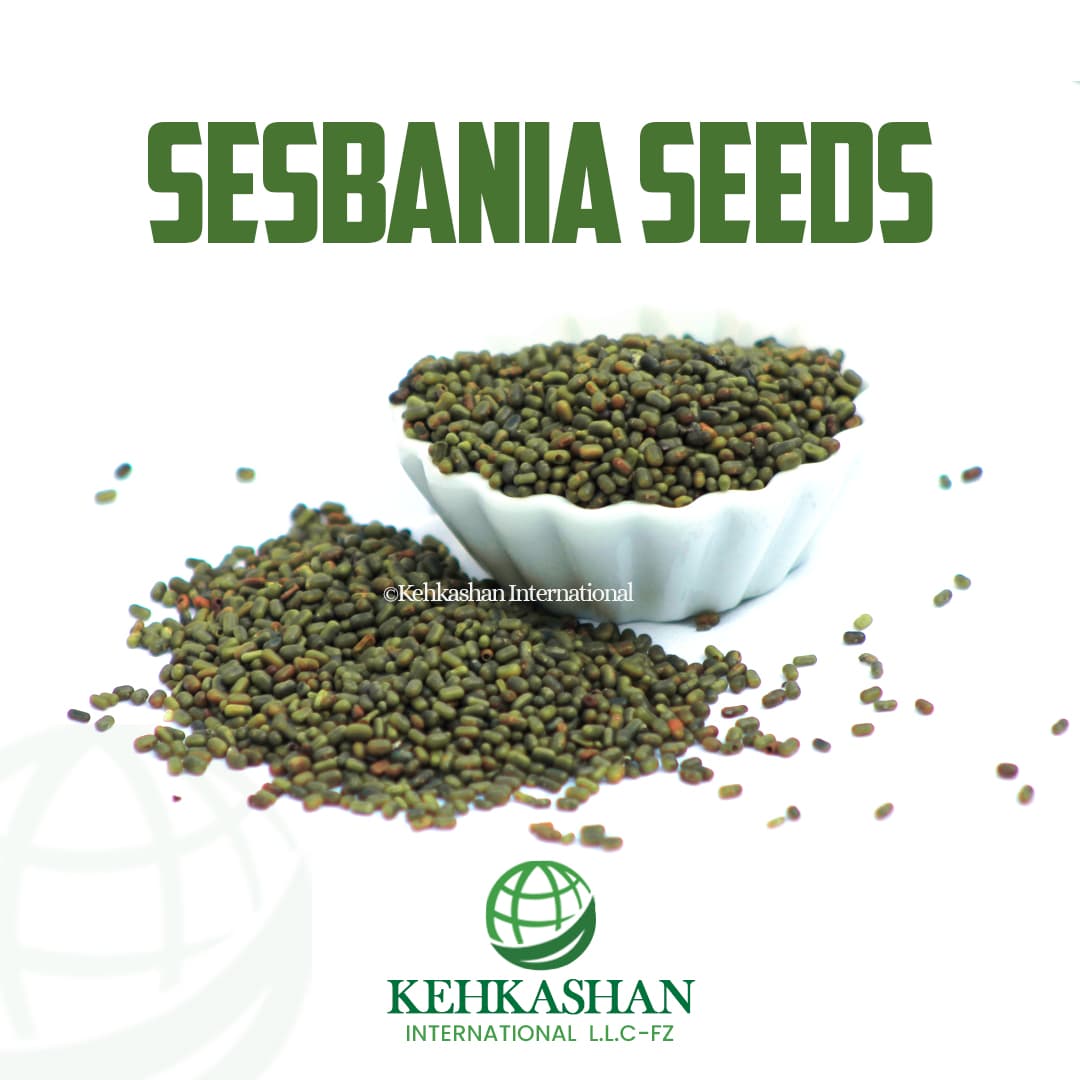
Cover crop and green manure seeds (Sesbania bispinosa, Crotalaria juncea, Vigna unguiculata, Cajanus cajan) come primarily from Pakistan and India. Buyers specify species, ISTA purity 99 percent, germination 80 percent minimum, moisture below 10 percent, and biomass and nitrogen-fixation potential. MOQ is 1,000 kg LCL or 22 metric tons FCL. Lead times Karachi to Mombasa are 12 to 18 days.
Why cover crops are the regenerative-agriculture trade nobody is selling well in English
Cover crops — sometimes called green manure crops, sometimes catch crops, sometimes nitrogen-fixing rotation crops — sit at an unusual intersection of three concurrent demand pulls. The first is the regenerative-agriculture pull, where North American and European farmers are integrating cover crops into row-crop rotations to restore soil organic matter, fix atmospheric nitrogen biologically, and reduce synthetic fertilizer reliance, as documented in FAO's "Save and Grow" sustainable crop production framework. The second is the rice-fallow pull, where Indian and Bangladeshi rice systems are increasingly using Sesbania green manure between paddy crops to restore nitrogen and reduce urea costs. The third is the African and tropical sustainable-intensification pull, where cowpea, pigeon pea and sun hemp are integrated into smallholder rotations for both food production and soil rehabilitation.
The supply side of this trade is dominated by Pakistan and India for the four main commercial species. The buyer side is fragmented across thousands of smallholder cooperatives, regional farm-input distributors, USAID and FAO project tenders, and a small but growing volume of premium retail-label cover-crop seed brands serving the regenerative-agriculture market in the US Midwest and EU Northern Plains.
This guide walks through the four primary commercial cover-crop species, the spec vocabulary, the origin matrix, and the documentation set we run on every Kehkashan container.
The four primary commercial cover-crop species
Sesbania bispinosa (and Sesbania aculeata) — Dhaincha green manure. Annual fast-growing leguminous shrub, 2 to 4 meters tall in a 60 to 90 day cycle. The dominant green-manure crop in Indian and Pakistani rice paddy rotation systems. Grown in the kharif fallow between two rice crops, then incorporated into the soil before the next rice transplant. Nitrogen-fixation rate 80 to 150 kg N per hectare in 60 days. Tolerates salinity, waterlogging, and alkaline soils where most legumes fail. Origins: Pakistan, India dominant; smaller production in Bangladesh, Sri Lanka.
Crotalaria juncea — Sun hemp. Annual fast-growing leguminous shrub, 2 to 3 meters tall in a 75 to 90 day cycle. Used in tropical and subtropical row-crop rotations as both green manure and fiber crop. Strong nitrogen-fixation (85 to 200 kg N per hectare). Suppresses nematode populations through biofumigant root exudates. Origins: India, Pakistan, Brazil, USA southern-tier specialty producers.
Vigna unguiculata — Cowpea. Annual leguminous shrub or vine, 50 to 80 cm tall in a 70 to 110 day cycle. Dual-purpose crop with significant green-manure use plus food-grain harvest. The dominant cover crop in Sub-Saharan African smallholder rotations and a growing US-Southeast cover-crop SKU. Nitrogen-fixation 60 to 120 kg N per hectare. Origins: India, Pakistan, Nigeria, Niger, Mali, Senegal, Ethiopia.
Cajanus cajan — Pigeon pea. Short-lived perennial leguminous shrub, 1 to 4 meters tall in a 4 to 9 month cycle. Dual-purpose food and forage crop with strong cover-crop applications. Nitrogen-fixation 90 to 200 kg N per hectare. Origins: India dominant, with Tanzania, Malawi, Kenya, Uganda, and Caribbean specialty producers.
A long tail of secondary cover-crop species — including buckwheat, fenugreek, lab-lab, hairy vetch, common vetch, faba bean, lupin, daikon radish, mustard, sorghum-sudangrass, and forage rye — accounts for the rest of the global trade. Most of these are not Pakistani-export-trade-significant species but we can source on request through partner channels.
Where commercial cover-crop seed comes from
Pakistan. Cultivation across Punjab (Sialkot, Gujranwala, Lahore for Sesbania; Multan and Bahawalpur for sun hemp and cowpea) and Sindh (rice-belt Sesbania production for paddy-fallow). Pakistani cover-crop seed export ships out of Karachi. This is Kehkashan's primary origin — direct cooperative relationships in the Sialkot-Gujranwala corridor for Sesbania, plus cooperative supply for sun hemp and cowpea.
India. The largest single-origin producer globally for all four species. Indian cover-crop seed export ships from Mumbai (Nhava Sheva), Mundra, Kandla, and Cochin (for South Indian Cajanus cajan).
Brazil. Specialty production for sun hemp (Crotalaria juncea) serving the Brazilian sustainable-agriculture programs. Limited export volume.
United States. Specialty production in Texas, Florida, Georgia, and California for sun hemp and cowpea serving the regenerative-agriculture brand-label segment. Premium pricing, limited volume.
Sub-Saharan Africa. Smallholder community-based seed system production for cowpea and Cajanus cajan, often supported by ICRISAT, IITA, USAID, and AGRA seed-system programs.
The four species together produce roughly 200,000 to 350,000 metric tons of cover-crop-purpose seed annually for export, with the bulk distributed through community-based seed systems and farm-input distribution chains rather than premium retail-label brands.
Specs that matter on the cover-crop CoA
A clean cover-crop seed CoA carries six fields beyond species declaration:
- Species and variety — botanical species name plus variety where applicable (commercial Sesbania varieties are mostly local-selected open-pollinated cultivars).
- Physical purity — ISTA standard, minimum 99 percent. Premium tier 99.5 percent.
- Germination — minimum 80 percent for Sesbania, 75 percent for sun hemp, 80 percent for cowpea, 75 percent for Cajanus cajan. Tested per ISTA International Rules for Seed Testing at species-appropriate temperature.
- Hard seed percentage — leguminous cover crops produce a percentage of hard (water-impermeable) seeds. Declared on the CoA, typically 5 to 20 percent depending on species and lot.
- Other-crop seed and inert matter — below 1 percent combined.
- Treatment status — declaration of seed treatment chemistry (Apron, Cruiser, Vitavax, Rhizobium inoculant) where seed has been treated, with full active-ingredient and rate disclosure.
Buyers running specifically for nitrogen-fixation programs may also specify Rhizobium-compatible inoculant. The Rhizobium strain depends on species — Bradyrhizobium for cowpea and pigeon pea, Mesorhizobium or Sinorhizobium for sun hemp, Rhizobium for Sesbania. Inoculant compatibility is a separate SKU consideration.
Container math, MOQ, and pricing
Cover-crop seed densities vary by species. A 20-foot full-container load holds:
- 22 to 24 metric tons of Sesbania bispinosa seed in 25 kg or 50 kg PP woven bags
- 22 to 24 metric tons of Crotalaria juncea sun hemp seed
- 22 to 26 metric tons of Vigna unguiculata cowpea seed
- 22 to 26 metric tons of Cajanus cajan pigeon pea seed
MOQ tiers as we run them at Kehkashan:
- 200 kg starter — minimum order, fits LCL consolidation
- 1,000 kg — break-even on most LCL routes
- 5,000 kg — full LCL consolidation with shared 20-foot booking
- 22,000 kg+ — full 20-foot FCL of single-species, single-lot material
- 26,000 kg+ — full 40-foot FCL for high-volume program buyers
Pricing tiers (FOB Karachi, indicative, 2026):
- Sesbania bispinosa (Dhaincha) green-manure grade: 1.20-1.60 USD/kg
- Sesbania aculeata green-manure grade: 1.20-1.60 USD/kg
- Crotalaria juncea sun hemp green-manure grade: 1.40-2.00 USD/kg
- Crotalaria juncea premium retail-label tier: 2.40-3.20 USD/kg
- Vigna unguiculata cowpea green-manure grade: 1.30-1.80 USD/kg
- Cajanus cajan pigeon pea green-manure grade: 1.50-2.10 USD/kg
- Rhizobium-inoculated seed: add 0.40-0.80 USD/kg over uncoated tier
- Organic-certified premium: add 0.60-1.20 USD/kg over standard tier
Documentation set on every shipment
Every cover-crop seed container leaves Karachi with the standard export pack:
- Bill of lading
- Commercial invoice and packing list
- Certificate of Origin (Pakistan Chamber of Commerce)
- Phytosanitary certificate (Department of Plant Protection)
- ISTA Certificate of Analysis (purity, germination, hard seed, other-crop seed, inert matter)
- Variety registration / Certificate of Variety (where applicable for hybrid lines)
- Seed treatment declaration (active ingredient, rate, applicator) where seed is treated or inoculated
- Form A or EUR.1 origin certificate where preferential tariff applies
- Fumigation certificate (mandatory for EU and US, optional for African and Indian destinations)
- Lot traceability statement back to multiplication block
EU organic-certified buyers add the EU-organic transaction certificate per shipment. African Sahelian and Sub-Saharan buyers under FAO, AGRA, USAID or EU-development-program tenders add a third-party-verified pre-shipment inspection (PSI) certificate per shipment.
Lead times by destination port
| Destination port | Country | Ocean transit | Typical Incoterm |
|---|---|---|---|
| Mombasa | Kenya | 12-18 days | CIF |
| Dar es Salaam | Tanzania | 14-20 days | CIF |
| Beira | Mozambique | 18-24 days | CIF |
| Lagos (Apapa) | Nigeria | 22-28 days | CIF |
| Tema | Ghana | 24-30 days | CIF |
| Cotonou | Benin | 24-30 days | CIF |
| Dakar | Senegal | 26-32 days | CIF |
| Mumbai | India | 7-10 days | CFR |
| Chittagong | Bangladesh | 14-18 days | CFR |
| Colombo | Sri Lanka | 8-12 days | CFR |
| New York | United States | 28-35 days | CIF |
| New Orleans | United States | 32-40 days | CIF |
| Hamburg | Germany | 21-28 days | CIF |
| Santos | Brazil | 28-35 days | CIF |
US Midwest cover-crop buyers typically use New York or New Orleans entry, with overland trucking or rail to inland farm-input distribution centers. African Sahelian inland buyers use Lagos, Tema, Cotonou or Dakar as the entry port, with overland trucking to inland destinations.
Demand-side pulls — who buyers actually are
Five end-use segments drive global cover-crop seed demand, each with distinct species, purity and pricing tolerances:
Indian and Bangladeshi rice-belt green-manure programs. Indian state-government and Bangladeshi rice-research-institute programs distributing Sesbania seed for paddy-fallow green-manure rotation. Volumes 5,000 to 30,000 ton annual programs through state-government tender systems and farm-input distribution chains.
Sub-Saharan African community-based seed systems. FAO, AGRA, USAID, EU-development-program tenders for smallholder cowpea, pigeon pea, and sun hemp seed in Niger, Mali, Burkina Faso, Nigeria, Ethiopia, Kenya, Tanzania, Mozambique, Zambia. Spec emphasis on locally-adapted varieties and seed-system program compliance. Volumes 500 to 5,000 ton annual programs per tender.
US Midwest and Northern Plains regenerative-agriculture programs. Direct farm sales through farm-input distributors and premium retail-label brands serving the regenerative-agriculture corn-soybean rotation segment. Spec emphasis on cover-crop biomass production, nitrogen-fixation rate, weed-suppression characteristics, and termination management. Volumes 100 to 2,000 ton annual programs.
EU Northern Plains arable-rotation programs. Cover crops integrated into corn, sugar beet, and arable-rotation systems in France, Germany, Poland, Netherlands, Czech Republic, and Hungary. Spec emphasis on EU-approved Rhizobium inoculants, OECD seed scheme compliance, and integration with crop-rotation legal requirements (CAP greening). Volumes 200 to 2,000 ton annual programs.
Premium retail-label brands. Specialty regenerative-agriculture seed brands like Cover Crop Solutions, Green Cover Seed, Albert Lea Seed, La Crosse Seed, and Walnut Creek Seeds. Spec emphasis on guaranteed-purity, organic certification where applicable, and premium retail packaging. Smaller per-buyer volumes (10 to 200 ton annual programs) but premium pricing applies.
Competition map — who buyers usually go to
The cover-crop seed export trade is fragmented across many regional players. Notable named players:
- Tanglewood Farms (US Midwest, premium retail-label brand)
- Albert Lea Seed (Minnesota, premium retail-label vertical)
- Green Cover Seed (Nebraska, regenerative-agriculture brand vertical)
- La Crosse Seed (Wisconsin, Midwest premium retail tier)
- Cover Crop Solutions (Pennsylvania, premium retail tier)
- DLF Seeds (Danish, world's largest forage and cover-crop seed company)
- Joordens Zaden (Dutch, EU premium tier)
- Vilmorin (French, EU premium tier)
Below the premium retail-label tier sit Indian and Pakistani export-grade producers, plus regional African and South American smallholder seed systems serving local markets.
For buyers running diligence, the differentiators between credible suppliers and marketplace listings are:
- Lot traceability to the harvest village or cooperative — a credible exporter can produce GPS coordinates or named cooperative for the lot, plus the specific multiplication generation (foundation, registered, certified, or breeder seed).
- Lab certification of germination, hard seed percentage, and other-crop-seed analysis from an ISTA-accredited lab.
- Rhizobium inoculant compatibility — for buyers needing inoculated seed, the Rhizobium strain and inoculation date must be documented for viability assessment.
- Variety adaptation to the destination agroclimatic zone — cover-crop varieties are highly zone-specific; a Sesbania variety adapted to Indian Punjab does not necessarily perform in Sub-Saharan African short-rains conditions, and a sun hemp variety adapted to Brazilian Cerrado does not necessarily perform in US-Midwest May-June planting windows.
We document each of these on every Kehkashan cover-crop shipment. Sample lots of 1 to 5 kg are couriered free of freight to qualified buyers worldwide; the sample fee credits against the first PO on acceptance.
When to buy ahead vs spot
Pakistani and Indian cover-crop seed multiplication runs primarily in the kharif (monsoon-irrigated multiplication, June to October) and rabi (post-monsoon irrigated multiplication, November to March) seasons. Quality assessment finishes 60 to 90 days post-harvest, and the year's pricing band stabilizes accordingly.
Annual contracts booked in February for kharif-multiplied seed and August for rabi-multiplied seed at fixed prices typically secure 8 to 12 percent better pricing than spot purchases through the year, plus guaranteed availability of the specified variety and treatment.
For Indian and Bangladeshi rice-belt program buyers and Sub-Saharan African community-based seed system buyers running at scale, annual contracts are essentially mandatory. For US Midwest and EU regenerative-agriculture buyers running smaller seasonal programs, mid-year purchases of 10 to 100 ton lots through the year work reliably.
Trade desk closing note
Cover crops are one of those crop categories where the supplier needs to know the agronomy as well as the buyer's procurement team does. The wrong species at the wrong seeding rate in the wrong climate is a season-killing mistake — and most "cover crop seed" sold on B2B marketplaces does not match the spec the buyer's downstream agronomy team intended. We work with multiplication partners in the Sialkot-Gujranwala corridor of Punjab for Sesbania, plus separate cooperative supply for sun hemp, cowpea, and Cajanus cajan, and consolidator partnerships into Indian, Brazilian, and US-southern-tier supply for buyers needing those origins specifically.
For a quote, send the five RFQ specs (species, variety where known, treatment yes/no, Rhizobium inoculant yes/no, quantity) to [email protected]. The trade desk replies within one working day with FOB Karachi, CFR your-destination-port, CIF, and DAP options.


