Skip to content
Kehkashan

Licorice Roots Exporter & Wholesale Supplier — 35+ Origins, 80+ Destinations

Kehkashan exports licorice (Glycyrrhiza glabra) roots from origin partners in Pakistan, Afghanistan, and Uzbekistan — supplied in bulk FCL or LCL with FOB Karachi or Jebel Ali, CFR, or CIF terms to confectionery, pharma, and traditional-medicine buyers across 80+ destinations.
  • 35+ origins
  • 80+ destinations
  • ISTA / OECD certified
  • LC at sight (USD/EUR)
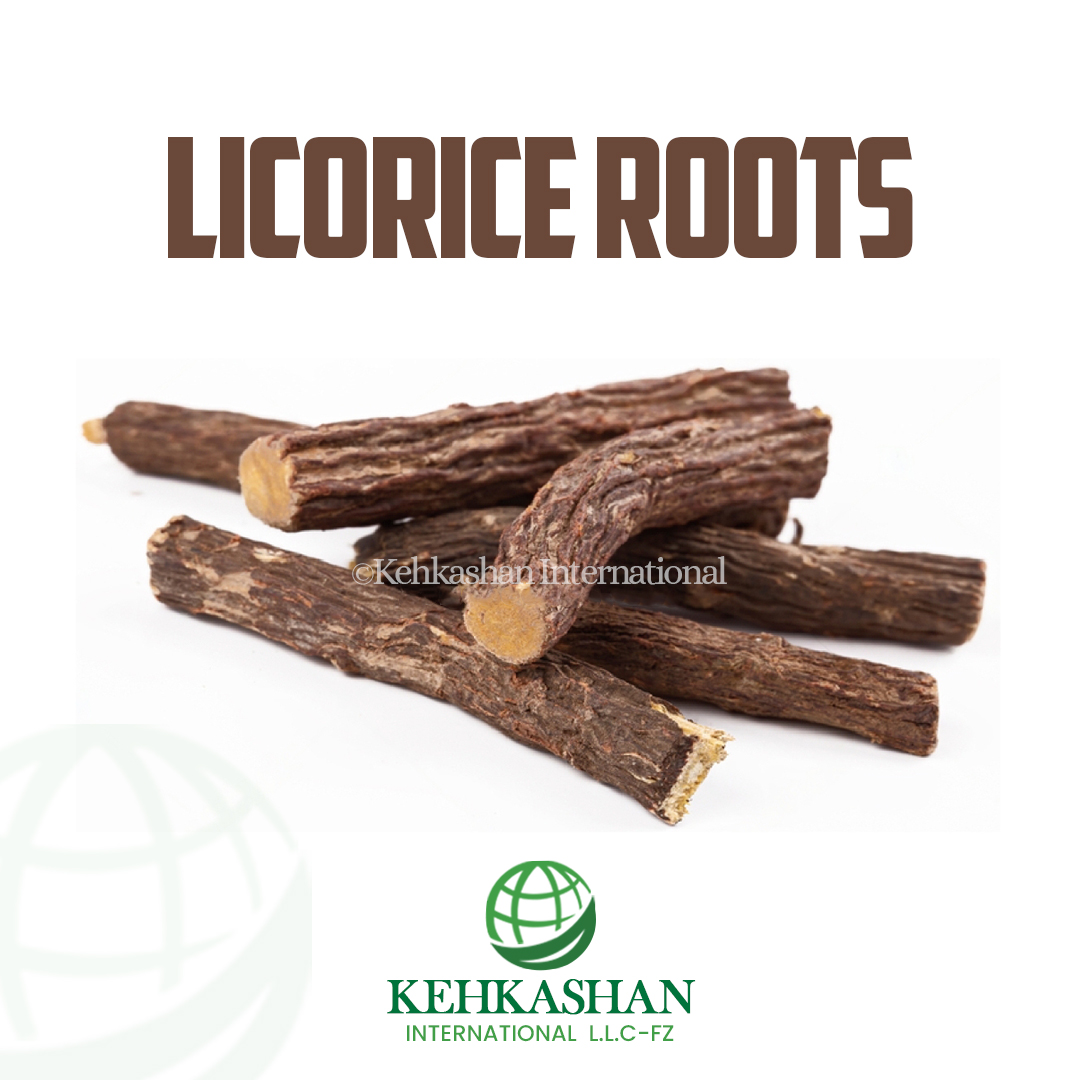
Licorice Roots — Kehkashan International product photo

Reference image. Sample lots and product-specific photography available on RFQ.

Quick facts

Scientific name
Glycyrrhiza glabra
Also known as
Mulethi, Liquorice, عرق السوس, سوس, солодка, лакрица
HS code
1211.90
Common varieties
Origins available
Pakistan, AF, Uzbekistan, TM, AZ, Kazakhstan, Tajikistan, Iran, SY
MOQ
1 × 20'FCL ≈ 18–22 MT
Pack sizes
20 kg PP bag (small-cut grade), 25 kg PP bag (powdered grade), 50 kg jute bag (sticks / unpeeled), 500 kg compressed bale (raw roots)
Specs
Glycyrrhizin: 8–12% (custom titration available), Moisture: < 12%, Grade: Small-cut · Sticks · Peeled · Unpeeled · Powder, Foreign matter: < 2%, Aflatoxin: EU MRL compliant
Lead time
14–28 days from PO confirmation
Incoterms
FOB Jebel Ali · CFR · CIF · DAP
Payment terms
LC at sight · TT · DP

Specification & container math

MOQ tiers

TierQuantityNote
Trial1 MT LCL
Commercial5–10 MT LCL
Standard FCL1 × 20'FCL ≈ 18–22 MT

FOB pricing bands (RFQ)

GradeIndicative range
Small-cut (commercial extraction)RFQ — entry tier
Sticks / unpeeled rootsRFQ — mid tier
Peeled premium sticksRFQ — premium tier
Powdered (custom mesh)RFQ — value-add

Lead times — top destinations

Discharge portTransitIncoterm
Karachi (Pakistan, FOB)0 daysFOB
Jebel Ali (UAE)4–6 daysCFR / CIF
Jeddah Islamic Port (KSA)8–12 daysCFR / CIF
Dammam (KSA)7–10 daysCFR / CIF
Mombasa (Kenya)14–20 daysCFR / CIF
Packaging formats
20 kg PP bag · 25 kg PP (powder) · 50 kg jute · 500 kg compressed bale
Container capacity
20'FCL: 18–22 MT

Documentation set per shipment

Every container leaves UAE Free Zone with the document pack below. Additional certificates (Halal, SASO conformity, BRC, organic, FairWild, etc.) are added on request before vessel loading.

  1. Bill of Lading (BL) — original 3/3 set
  2. Commercial Invoice — UAE Free Zone issued
  3. Packing List with lot codes
  4. Certificate of Origin (CoO) — Dubai Chamber attested
  5. Phytosanitary Certificate — origin NPPO
  6. EU Mycotoxin / Aflatoxin test report (per EU 1881/2006)
  7. Heavy-metals test report (Pb, Cd, As, Hg)
  8. Microbiological test (Salmonella, E. coli, total plate count)
  9. Fumigation Certificate
  10. Form A (GSP) where applicable

Procurement-team questions

Answers to the questions buyers ask us most often during RFQ and trial-shipment evaluation.

What glycyrrhizin content should I specify?
Standard commercial extraction wants 8–12% glycyrrhizin on dry-matter basis. Pharma-grade extracts target 10–14%. Confectionery (Dutch drop, Italian liquirizia) wants 6–10%. Pakistani and Afghan wild-harvest licorice typically tests 8–12%. Uzbek and Turkmen tests 9–14% (higher because of older root age). We custom-titrate by blending lots to spec — request glycyrrhizin assay on every PO.
Wild-harvest versus cultivated — quality difference?
Wild-harvest (Pakistan Cholistan, Afghan Helmand, Uzbek Aral basin) gives 4–6 year mature roots with higher glycyrrhizin and stronger aroma. Cultivated (Russian / Chinese irrigated farms) gives 2–3 year roots, lower glycyrrhizin, more uniform but less complex flavour. Pharma extractors prefer wild-harvest for active-compound concentration; confectionery makers often prefer cultivated for batch consistency.
Are there CITES or sustainability concerns?
Licorice (Glycyrrhiza glabra) is not CITES-listed but unsustainable harvest pressure has degraded Central Asian populations since the 1990s. We source from cooperative wild-harvest programmes that practice rotational extraction (5–7 year recovery between sites) and provide sustainability declaration on every shipment. Some EU buyers now require FairWild certification — available at premium.
How do you handle ammoniated glycyrrhizin and EU regulations?
Raw licorice root is unrestricted. Glycyrrhizin extracts > 100 mg / day intake have EU food-safety advisory. We supply raw root only — ammoniated glycyrrhizin (the sweetener) and concentrated extracts are downstream of our trade. Buyers manufacturing extracts manage compliance against EFSA and individual-country regulations.
What about heavy-metals testing?
Licorice root accumulates lead, cadmium, and arsenic from soil. Specify Pb < 3 ppm, Cd < 1 ppm, As < 5 ppm (EU pharma spec) on every COA. Wild-harvest lots from the Aral basin can show elevated cadmium because of legacy industrial pollution; we screen at origin and reject any lot above EU MRL. Heavy-metals certificate accompanies every shipment.
Can you supply licorice powder customised by mesh size?
Yes — 60 mesh, 80 mesh, or 100 mesh on request. Confectionery makers want 60 mesh (coarse); tea-blend retail wants 80 mesh; pharma / nutraceutical wants 100 mesh. Premium 15–25% over root pricing because of milling step. Powder ships in 25 kg PP bags with food-grade liner; MOQ 1 MT LCL.

Long-form guides written by the Kehkashan trade desk for buyers and procurement teams scoping origin trade-offs, variety codes, and documentation flows.

Quote a 20'FCL of alfalfa today

RFQ response within 24 hours. FOB Jebel Ali, CFR, CIF, or DAP. LC at sight, TT, or DP.

Request a quoteWhatsApp

Dispatch from Jebel Ali. Lead time 14–21 days. RFQ within 24h.