EU agricultural imports comply with Regulation 1881/2006 (mycotoxins), 396/2005 (pesticide residues), 2018/848 (organic), 178/2002 (general food safety), and the emerging Corporate Sustainability Due Diligence Directive (CSDDD). Hamburg, Rotterdam, Antwerp, Felixstowe, Marseille and Genoa are the major entry ports. Mandatory documentation includes phytosanitary, CoA, fumigation, and origin certificates.
Why EU agricultural-import compliance is the world's most rigorous regulatory regime — and what that means for procurement
The European Union maintains the world's most comprehensive food-safety, pesticide-residue, mycotoxin, and sustainability regulatory regime for imported agricultural commodities. Combined with the EU's position as the world's second-largest agricultural-import market (after China) at roughly 160 billion EUR annually per DG AGRI monitoring data, the EU regulatory regime sets the de-facto global standard that many other markets benchmark against.
For EU procurement teams, the regulatory regime is both a challenge (more documentation than other markets, stricter port-rejection patterns) and an asset (suppliers that pass EU compliance reliably are by definition operating at the global standard). The EU procurement-side priority is therefore not just price but supplier compliance discipline — a supplier with a documented track record of clean EU shipments is materially safer than a supplier offering lower FOB pricing without that track record.
This guide walks through the major EU regulatory frameworks that govern agricultural imports, the EU port and logistics matrix, the major buyer segments, and the supplier-due-diligence framework that EU procurement teams should run.
Major EU regulatory frameworks for agricultural imports
Regulation (EC) No 1881/2006 — Maximum Levels for Contaminants in Foodstuffs. Sets binding maximum levels for mycotoxins (aflatoxins, ochratoxin A, fumonisins, deoxynivalenol, zearalenone, T-2 and HT-2 toxins, patulin), heavy metals (lead, cadmium, mercury, arsenic, tin), nitrate, polycyclic aromatic hydrocarbons (PAH), 3-MCPD and glycidyl esters, and dioxins and PCBs. Each commodity has specific limits — sesame seed aflatoxin limits differ from spice aflatoxin limits which differ from infant-food limits. EU port testing is rigorous; lots failing 1881/2006 are rejected at port.
Regulation (EC) No 396/2005 — Maximum Residue Levels of Pesticides. Sets maximum residue levels (MRLs) for over 1,200 active pesticide substances across most plant and animal-origin commodities. The EU MRL database maintained by DG SANTE is the operative reference. Some MRLs are set at the limit of detection (LOQ) for active substances not approved in the EU, which effectively bans use of those substances on EU-destined commodities. Annex A and Annex B substances have specific testing requirements.
Regulation (EU) 2018/848 — Organic Production and Labelling. Replaces the prior 834/2007 organic regulation. Sets standards for EU-organic certification: organic-input requirements, organic-multiplication requirements, organic-processing requirements, lot-level traceability, transaction certificates per shipment. Multiple recognized control bodies (Ecocert, Bio Suisse, Ecoland, Soil Association, IMO, etc.). EU-organic equivalence with USDA-NOP, JAS-organic, and Canadian COR allows mutual-recognition shipping.
Regulation (EC) No 178/2002 — General Food Law. The foundational food-safety regulation. Establishes the EU Rapid Alert System for Food and Feed (RASFF) — when a food-safety incident is detected at port or in market, RASFF notifications cascade across the EU via the public iRASFF window and trigger heightened testing for similar shipments. Suppliers with RASFF notifications against their name face increased port-testing burden for years afterward.
EU Plant Health Regulation 2016/2031. Sets phytosanitary requirements for plant materials. Specific pests on the EU quarantine list — buyers must verify origin material is free of these pests with documented testing.
Corporate Sustainability Due Diligence Directive (CSDDD), 2024/1760. Newly applicable from 2024-2027 in phases. Requires large EU-headquartered companies to conduct human-rights and environmental due diligence across their supply chains, including agricultural supply chains. Suppliers will need to provide documented evidence of fair labor practices, deforestation-free sourcing, and environmental management.
EU Deforestation Regulation (EUDR), 1115/2023. Applies from December 2024 to soy, cocoa, coffee, palm oil, cattle, rubber, and wood products. Requires geolocation traceability of production land plus deforestation-free certification post-December 2020. Will likely be extended to additional commodities in subsequent updates.
IUU Regulation (EC) No 1005/2008. Applies to fishery and aquaculture products. Requires catch certification documentation.
EU port matrix and logistics
Hamburg (Germany). Largest EU port for agricultural commodity imports. Strong cold-chain and ambient warehousing infrastructure. Direct services from Karachi (21-28 days), Mumbai (22-28 days), Jebel Ali, all major Asian and American ports.
Rotterdam (Netherlands). Second-largest EU port for agricultural commodity imports. Particularly strong for bulk cereals, oilseeds, and edible oils. Industrial-scale port-side processing and re-export infrastructure.
Antwerp (Belgium). Major port for cocoa, coffee, fruits, and specialty agricultural commodities. Strong cold-chain infrastructure.
Felixstowe (UK). Post-Brexit, Felixstowe handles UK-destined agricultural imports separately from EU mainland trade. Note that UK has diverged from some EU regulations post-2020 — verify destination-specific compliance.
Marseille (France). Mediterranean entry port for North African, Middle Eastern, and West Asian origin material. Direct services from Egyptian, Turkish, Tunisian, Moroccan ports.
Genoa (Italy). Mediterranean entry port for South Asian and Middle Eastern origin material destined for Italian, Swiss, and Southern European distribution.
Gdansk (Poland). Growing Eastern European entry point. Strong infrastructure for Russian and Ukrainian-origin material (though current geopolitical situation has reduced this).
Helsinki and Stockholm. Nordic entry points for premium-tier agricultural imports (organic-certified, clean-label retail).
Inland routing. From Hamburg and Rotterdam, primary distribution corridors run through the German autobahn network to Munich, Berlin, the Czech Republic, Austria, and Northern Italy. From Marseille and Genoa, distribution runs through the French autoroutes and Italian autostrade. Rail freight is increasingly used for high-volume bulk commodities.
Major EU buyer segments
Food retail chains. Carrefour, Tesco, Sainsbury's, Lidl, Aldi, REWE, Edeka, Albert Heijn, Mercadona, Auchan. Major retail brands operate own-brand procurement programs. Spec emphasis on food-safety compliance, organic certification where applicable, and cost-tier consistency.
Food-industrial brands. Nestlé, Unilever, Danone, Mondelēz, Mars Wrigley, Ferrero, Barilla, Lactalis. Major food-industrial brands operate scale procurement programs with strict supplier-qualification protocols.
Specialty retail and clean-label brands. Bio-Company, Biocoop, Naturalia, Holland & Barrett, plus a long tail of regional organic-certified retail. Spec emphasis on EU-organic certification, sustainability claims, and clean-label retail packaging.
Bakery and confectionery industry. Industrial bakery (Wenzel, Lantmännen Unibake, Aryzta) plus specialty bakery. Particular demand for sesame, fennel, anise, caraway, and poppy seeds.
Tahini, halva and Middle Eastern food industry. Concentrated in Greece, Cyprus, Israel-adjacent Mediterranean trade, plus the EU's substantial Middle Eastern diaspora retail. Spec emphasis on premium-tier sesame.
Pharmaceutical, nutraceutical and cosmetic industry. Weleda, Yves Rocher, L'Occitane, plus a long tail of EU clean-beauty and supplement brands. Spec emphasis on Pharmacopoeia-grade material, organic certification, IFRA and COSMOS compliance for cosmetic ingredients.
Animal feed industry. Cargill, Bunge, ADM, plus EU-domestic feed manufacturers. Spec emphasis on cost-tier with mycotoxin compliance.
Forage seed for EU dairy. DLF Seeds (Danish), Barenbrug (Dutch), Vilmorin (French), plus regional cooperative supply.
Supplier due-diligence framework — what EU procurement teams should run
The EU procurement-side priority is supplier compliance discipline. Lots failing EU regulation at port are typically rejected (not remediated), and RASFF notifications follow the supplier for years. The differentiators between credible international suppliers and marketplace listings:
- Multi-shipment EU compliance track record. A supplier with 5+ years of clean EU shipments is materially safer than a new supplier. Ask for prior-shipment Certificates of Analysis and customs records.
- Lot-level laboratory testing from internationally-recognized labs. SGS, Bureau Veritas, Intertek, Eurofins. Per-lot testing of mycotoxins, pesticide residues, heavy metals, microbiological parameters, and crop-specific markers. EU procurement teams should require lab reports from named labs, not generic supplier-side certificates.
- EU-organic certification chain (where applicable). Valid certificate from recognized EU control body, transaction certificate per shipment, lot-level traceability back to the multiplication or harvest block.
- Sustainability and CSDDD-readiness documentation. For larger EU-destined buyers, suppliers will increasingly need to provide documented evidence of fair labor practices, environmental management, and (for relevant commodities) deforestation-free sourcing under EUDR.
- Quality-management system certification. ISO 9001, FSSC 22000, BRC, IFS, SQF — at least one international quality management certification with documented annual audit.
- No active RASFF notifications. Verify on the EU RASFF Portal (publicly accessible). A supplier with prior RASFF notifications is a heightened-risk supplier.
- Cooperative-level traceability. A credible supplier can produce GPS coordinates or named cooperative for the lot being offered.
- Multi-origin offering capability. EU buyers running multi-origin programs (e.g. Ethiopian Humera + Sudanese + Pakistani sesame in a single supply panel) prefer suppliers with consolidator capability rather than single-origin specialists.
Pakistan-EU agricultural trade — what's going through this corridor
Pakistan-EU agricultural trade has grown materially over the past decade as EU buyers diversify sourcing away from over-concentrated Indian, Egyptian, and Chinese supply chains. Major Pakistan-EU export categories:
- Basmati rice — Pakistan competes with India for the EU premium-rice market.
- Sesame seeds — Pakistani sesame at 99-99.95% sortex grade for EU bakery and tahini industry. See /insights/sesame-seeds-buyers-guide-2026 and /insights/sesame-origin-comparison-humera-sudan-pakistan-india.
- Spices and herbal seeds — fenugreek, fennel, black seed, nigella for EU spice retail and clean-eating retail.
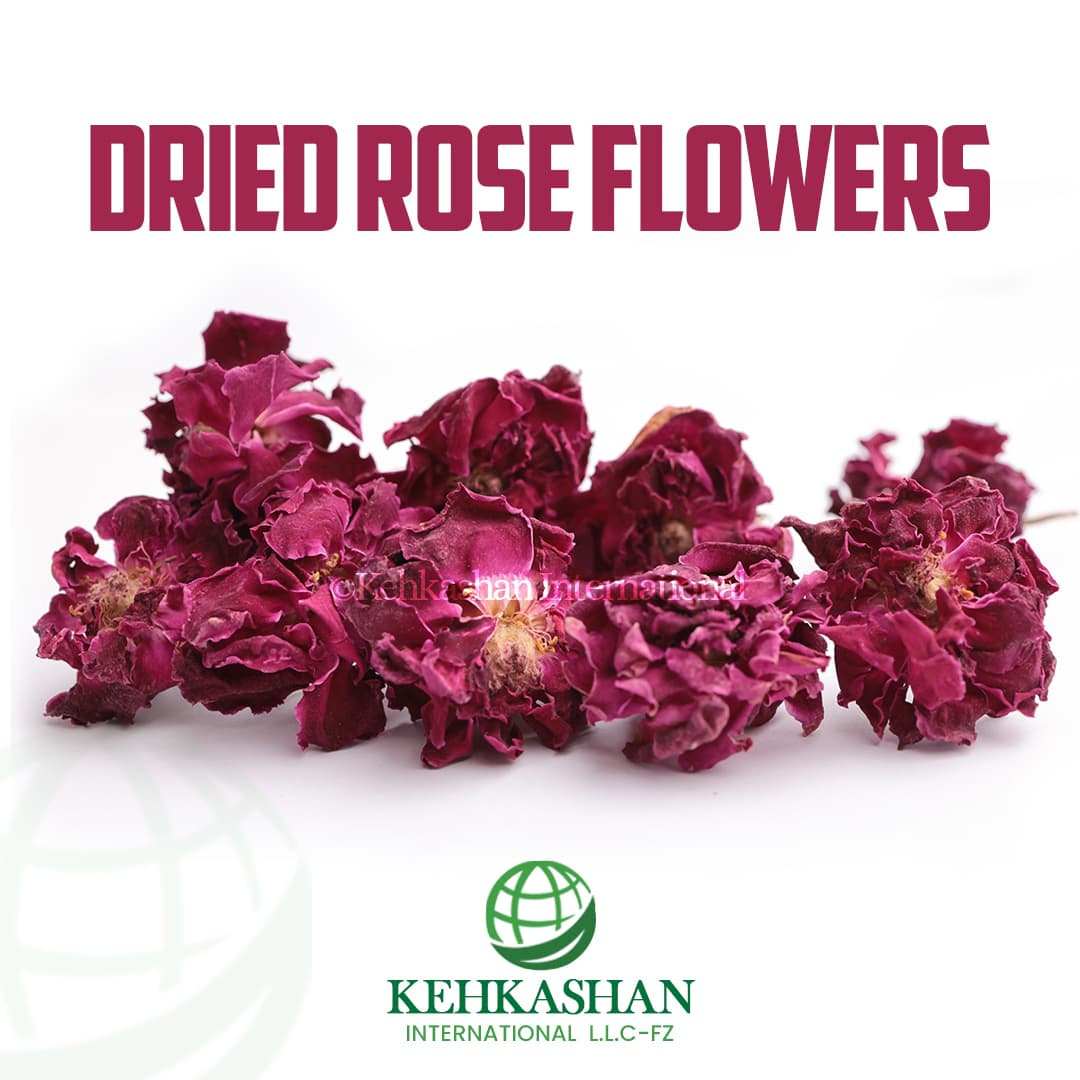
- Damask rose dried flowers — for EU clean-beauty cosmetic and premium herbal-tea brands.
- Sea buckthorn berries — for EU nutraceutical and clean-beauty cosmetic brands. See /insights/sea-buckthorn-berries-buyers-guide-2026.
- Pine nuts (Pinus gerardiana) — for EU specialty bakery and confectionery. See /insights/pakistani-pine-nuts-buyers-guide-2026.
- Licorice roots — for EU pharmaceutical and herbal-tea industry. See /insights/licorice-roots-buyers-guide-2026.
- Cotton, leather and textile inputs — substantial trade volume.
- Mango (Sindhri, Chaunsa) — fresh-fruit export with growing EU premium-retail demand.
- Sprouting seeds — for EU clean-eating retail. See /insights/sprouting-seeds-buyers-guide-2026.
For the regional pillar on Pakistani-origin sourcing, see /insights/pakistan-export-origin-buyers-guide-2026.
EU GSP+ preferential tariff regime — material for Pakistani-origin imports
Pakistan benefits from the EU GSP+ (Generalized System of Preferences Plus) preferential tariff regime, which provides duty-free access for many Pakistani-origin agricultural commodities to the EU market. This is a material competitive advantage for Pakistani-origin supply vs Indian, Egyptian, and Chinese supply (which face standard MFN tariffs on many product categories).
GSP+ requires Form A or EUR.1 origin certification per shipment, and the EU operates a Registered Exporter (REX) system for self-certification of origin. Suppliers without REX registration cannot deliver GSP+ benefits to their EU buyers. Verify REX registration status on the EU REX database.
Trade desk closing note
EU agricultural-imports procurement is characterized by the world's most rigorous regulatory regime, the highest documentation discipline expectations, and a buyer base that pays premium pricing for guaranteed compliance over cost-tier savings. The supplier-side priority is therefore EU compliance discipline — multi-shipment clean track record, lot-level laboratory testing from internationally-recognized labs, organic and sustainability certification where applicable, and CSDDD-readiness documentation increasingly required for larger buyers.
We work with cooperatives across Pakistani Punjab, Sindh, Khyber-Pakhtunkhwa, Balochistan, and Gilgit-Baltistan plus consolidator partnerships into Indian, Ethiopian, Sudanese, US, Australian, Italian and other origin supply for buyers running multi-origin programs. Free Zone routing through Jebel Ali enables operational efficiency. We maintain ISO 9001:2015 quality management certification with documented annual audit, lot-level laboratory testing from SGS, Bureau Veritas, Intertek and Eurofins, and EU GSP+ REX registration for Pakistani-origin shipments.
For procurement-team RFQs, send specifications to [email protected]. The trade desk replies within one working day with FOB Karachi or Free Zone Jebel Ali consolidation, CFR Hamburg/Rotterdam/Felixstowe/Marseille/Genoa, CIF, and DAP options. We support EU compliance documentation discipline on every EU-destination shipment.


