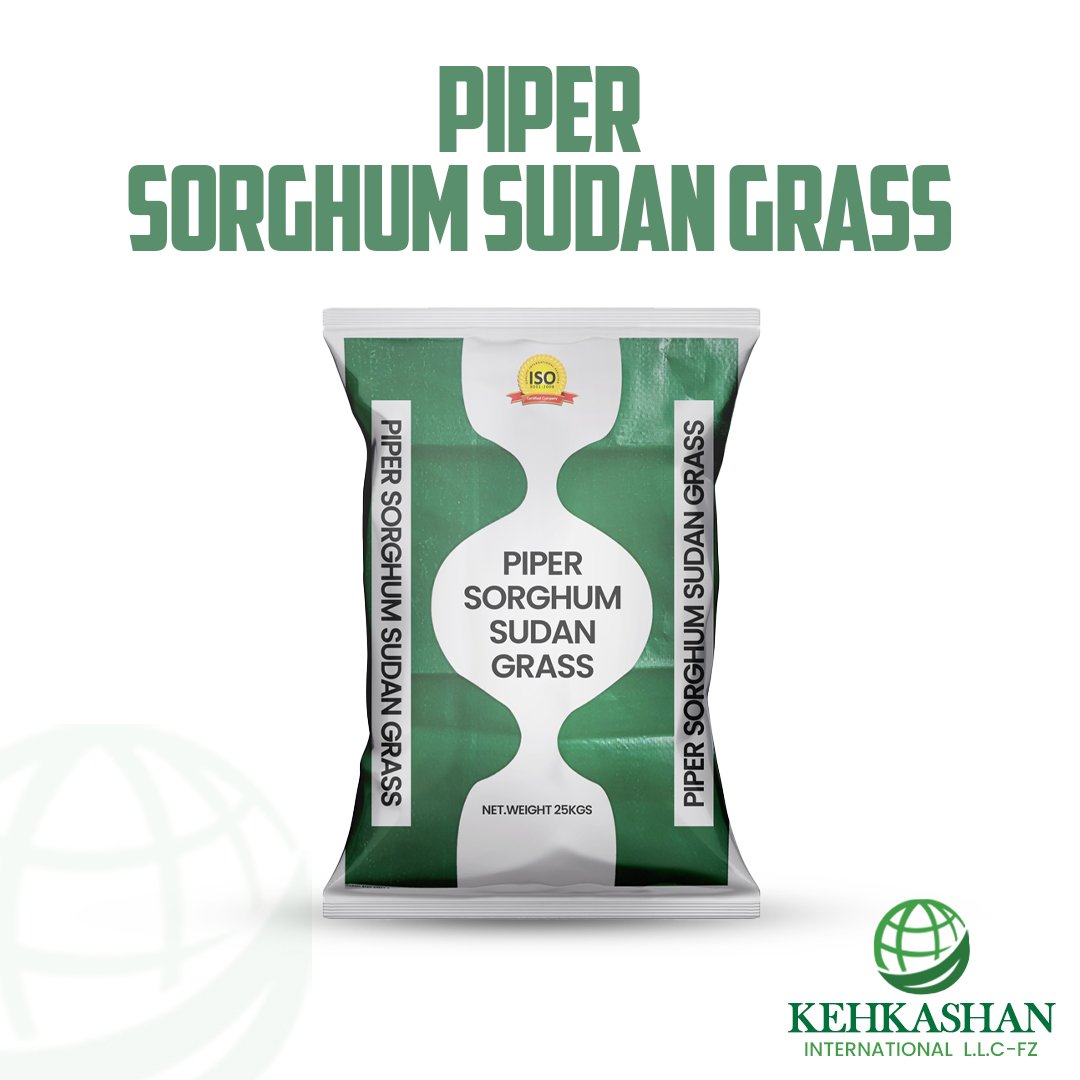
Kehkashan exports Piper-variety sorghum-sudan hybrid seeds from origin partners in the USA — supplied in bulk FCL or LCL with FOB Jebel Ali, CFR, or CIF terms to premium forage programs and dairy operations seeking BMR-style high-quality biomass across 80+ destinations.
Every container leaves UAE Free Zone with the document pack below. Additional certificates (Halal, SASO conformity, BRC, organic, FairWild, etc.) are added on request before vessel loading.
Bill of Lading (BL) — original 3/3 set
Commercial Invoice — UAE Free Zone issued
Packing List with lot codes per pallet
Certificate of Origin (CoO) — Dubai Chamber attested
Phytosanitary Certificate — origin NPPO
ISTA Certificate of Analysis (purity, germination, dodder)
OECD Seed Scheme tag (for OECD-eligible varieties)
Fall-dormancy declaration (alfalfa / clover only)
Fumigation Certificate
GMO / Non-GMO declaration
Form A (GSP) where applicable
Procurement-team questions
Answers to the questions buyers ask us most often during RFQ and trial-shipment evaluation.
Why pick Piper specifically over a BMR hybrid?
+
Piper is a fine-stem, true sudan-grass type (not a sorghum-sudan hybrid) with the lowest prussic-acid risk among summer annual forages. It cures faster and easier into hay, palatable for horses, sheep and dry cows. BMR hybrids deliver higher yield and digestibility on dairy chop, but Piper wins on hay export and equine markets where stem fineness is everything.
Does Piper still get planted commercially?
+
Yes — Piper has stayed commercial since the 1953 Wisconsin release because the equine and small-ruminant hay markets specifically demand fine-stem sudan-type grass. Saudi equine operators, GCC sheep / goat dairies and Pakistani horse-feed compounders are the main buyers. Volumes are smaller than BMR hybrids but pricing is firmer.
What is the seeding rate?
+
15–25 kg per hectare for hay; 10–15 kg/ha for grazing. Piper produces finer biomass than BMR hybrids, so seed populations run higher. A 22 MT FCL covers 880–1,470 ha. We supply with thiram + apron treatment.
Can Piper be re-cut multiple times?
+
Yes — Piper supports 2 to 4 cuts per season depending on rainfall / irrigation. Re-cuts must wait until plants reach 75 cm to avoid prussic-acid spike. Cut height 15 cm leaves the meristem for fast regrowth. Total seasonal yield 8–12 MT dry matter / ha under irrigation.
Where does the seed crop originate?
+
Certified Piper seed is grown principally in the Texas High Plains and Wisconsin under AOSCA seed-scheme rules. Pakistani and Indian re-multiplied lots are available at lower cost but without the AOSCA tag — use those only where the buyer accepts a national ISTA tag in lieu of the OECD scheme.
Related buyer guides & trade briefs
Long-form guides written by the Kehkashan trade desk for buyers and procurement teams scoping origin trade-offs, variety codes, and documentation flows.