Paliers MOQ
| Palier | Quantité | Note |
|---|---|---|
| Trial | 500 kg LCL | — |
| Standard FCL | 1 × 20'FCL ≈ 22–24 MT | — |
| Programme | 3–6 × 20'FCL / season | — |
Kehkashan exports Persian clover seeds (Trifolium resupinatum) from cooperative partners in Pakistan (Punjab) and Iran — supplied in bulk FCL or LCL with FOB Karachi, CFR, or CIF terms to Gulf and East African dairy buyers running irrigated winter forage rotation.
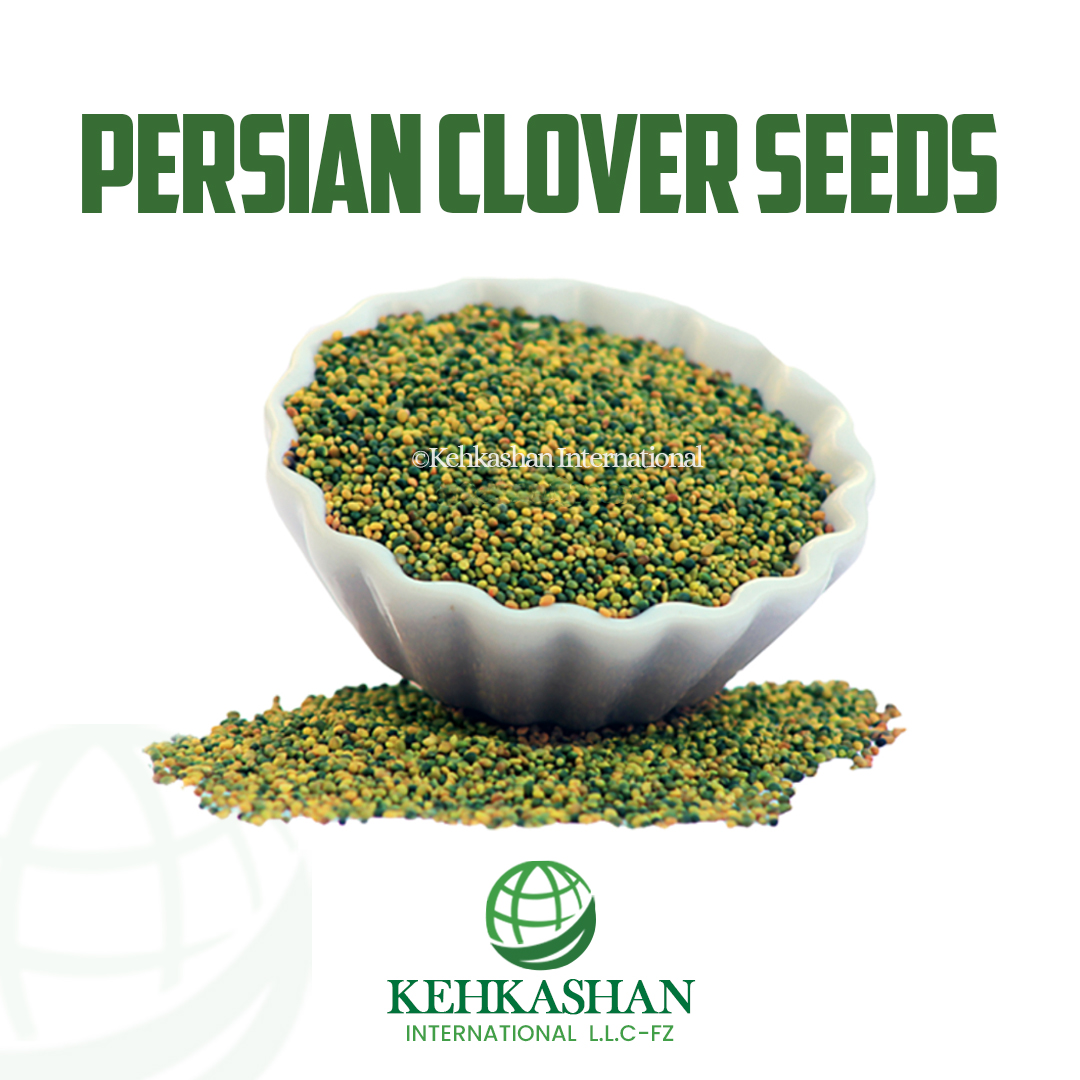
Reference image. Sample lots and product-specific photography available on RFQ.
| Palier | Quantité | Note |
|---|---|---|
| Trial | 500 kg LCL | — |
| Standard FCL | 1 × 20'FCL ≈ 22–24 MT | — |
| Programme | 3–6 × 20'FCL / season | — |
| Grade | Fourchette indicative |
|---|---|
| Pakistani Punjab cooperative | RFQ — entry tier |
| Iranian Khuzestan / Fars | RFQ — mid tier |
| ISTA-tagged premium lots | RFQ — premium tier |
| Port de déchargement | Transit | Incoterm |
|---|---|---|
| Karachi (Pakistan, FOB) | 0 days | FOB |
| Jebel Ali (UAE) | 4–6 days | CFR / CIF |
| Jeddah Islamic Port (KSA) | 8–12 days | CFR / CIF |
| Dammam (KSA) | 7–10 days | CFR / CIF |
| Mombasa (Kenya) | 14–20 days | CFR / CIF |
Chaque conteneur quitte la zone franche des EAU avec le pack documentaire ci-dessous. Des certificats supplémentaires (Halal, SASO, BRC, bio, FairWild, etc.) sont ajoutés sur demande avant le chargement.
Shaftal seed is multiplied by cooperatives around Sargodha, Faisalabad, and Sahiwal in Pakistani Punjab, and in Khuzestan and Fars in Iran where it is called shabdar. Saudi and Emirati dairy pivots take Punjab lots through Jebel Ali. Iraqi farms via Umm Qasr and Uzbek cotton-rotation growers buy Iranian and Punjab lots on price.
Pakistani shaftal is a tall, late-flowering var. majus landrace giving five to six cuts from November to April. Australian var. majus cultivars Maral and Kyambro share that habit. Var. resupinatum lines Nitro Plus and Prolific are prostrate, early flowering, and suit single-cut grazing. Iranian shabdar sits between, with heavier stems and stronger salinity tolerance.
Shaftal ships on an ISTA-format COA at 98 percent purity minimum and 85 percent germination minimum, tested at 20 degrees Celsius over seven days. Hard seed is declared, usually 10 to 20 percent. Dodder (Cuscuta) is stated absent, moisture reads 9 to 11 percent at packing, and thousand-seed weight is listed near 1 gram.
Saudi and Emirati dairy pivots sow shaftal as the winter cut-and-carry crop between summer Rhodes grass cycles. Uzbek and Turkmen growers plant it after cotton to fix nitrogen before the next lint crop. Pakistani and Iraqi hay cooperatives bale late cuts for buffalo and Holstein herds. Kenyan highland dairies trial it at Nakuru.
Punjab shaftal trucks to Karachi in two days and sails to Jebel Ali in 4 to 6 days. From Jebel Ali, Dammam is 7 to 10 days, Umm Qasr 4 to 6 days, and Mombasa 14 to 20 days. Uzbek buyers route via Bandar Abbas rail or Karachi-Torkham trucking, adding 12 to 20 days.
Shaftal is quoted against an RFQ as FOB Karachi, FOB Jebel Ali, CFR, or CIF destination. Price moves on tier (Punjab cooperative, Iranian Khuzestan, ISTA-tagged), crop-year freshness after the May harvest, purity above 98.5 percent, and container count. July annual contracts for the October sowing window price under September spot.
A 1 kilogram sample from the sealed Punjab lot goes by courier with cooperative ISTA report. Buyers re-test germination in-house or at SGS Karachi. After signed approval the proforma opens against LC at sight or TT. A supervisor photographs bag count and seal numbers at Karachi stuffing, and documents release through the buyer's bank.
A 20-foot FCL holds 22 to 24 metric tonnes of shaftal in 25 kilogram PP bags but 20 tonnes in 50 kilogram jute, which stacks less densely. A 40-foot high-cube lifts 26 to 27 tonnes before the road-weight cap. LCL trials of 500 kilograms consolidate at Karachi or Jebel Ali with other forage seed.
Saudi importers clear a MEWA seed-import permit and SASO conformity, with the phytosanitary certificate stating freedom from Cuscuta, Striga, and Avena fatua. Iraq requires an Arabic Certificate of Origin and Ministry of Agriculture registration at Umm Qasr. Uzbekistan's plant quarantine agency asks for a Karachi phyto plus fumigation certificate before transit clears Termez.
Réponses aux questions les plus fréquentes posées par les acheteurs lors d'un RFQ ou d'une évaluation d'expédition d'essai.
Guides détaillés rédigés par le bureau commercial Kehkashan pour les acheteurs et les équipes achats — arbitrages d'origine, codes variétés et flux documentaires.
trade brief
Trade-desk reference for clover seed importers: Persian, Berseem, Red, White, Crimson — Pakistani and European origin economics, ISTA bands, dodder-freedom.
Principales destinations
Du bureau commercial
Réponse au RFQ sous 24 heures. FOB Jebel Ali, CFR, CIF ou DAP. LC at sight, TT ou DP.
Expédition depuis Jebel Ali. Délai 14–21 jours. RFQ sous 24 h.