Pakistan exports alfalfa, berseem and Persian clover, fenugreek, fennel, black seed, sesame, rice, cotton, mango, kinnow, pine nuts, licorice, sea buckthorn, dried roses and many specialty crops. Karachi and Gwadar are the primary ports. Phytosanitary certification is via the Department of Plant Protection. MOQ is one 20-foot full-container load.
Why Pakistan is an underused origin in the global agri-trade
Pakistan sits at the intersection of three agroclimatic zones — Mediterranean (northwestern Punjab and Khyber-Pakhtunkhwa), subtropical irrigated (Punjab and Sindh river basins), and arid temperate (Balochistan, the Tharparkar desert, and the Gilgit-Baltistan high-altitude valleys). The combination supports an unusually broad crop portfolio compared to other South Asian origins, and the country has the infrastructure (Karachi as a top-30 global port, the Indus river irrigation system, roughly twelve million hectares of irrigated cropland per FAO country data) to scale production for export.
The international buyer-perception gap is the bigger story. Pakistan is well-known as a basmati rice and cotton origin, less-known as a forage seed and herbal-spice origin where it is structurally cost-competitive against larger Indian and Egyptian producers. The country produces roughly the same quality of Persian clover, fenugreek, fennel, black seed, and sesame as the Indian premium tier — at 15 to 30 percent lower FOB pricing — but the export-marketing language gap means most international buyers default to Indian supply by habit.
This guide is the regional pillar for buyers considering or scaling Pakistani sourcing. It walks through what Pakistan exports at scale, the agroclimatic cultivation belts, the port and logistics infrastructure, the regulatory regime, and the supplier-due-diligence framework that separates credible exporters from marketplace listings. For deep-dives on specific crops, see the linked product pillars throughout this guide.
What Pakistan exports at commercial scale
Forage and pasture seeds. Persian clover (Trifolium resupinatum, primary global export volume), Berseem clover (Trifolium alexandrinum, secondary to Egyptian supply but cost-competitive), Egyptian-style alfalfa (Medicago sativa, smaller volume), forage sorghum, Sudangrass, hybrid pearl millet (Pennisetum glaucum), forage cowpea, sun hemp (Crotalaria juncea), and Sesbania green-manure cover crops. See /insights/clover-seeds-multispecies-buyers-guide-2026 and /insights/hybrid-pearl-millet-buyers-guide-2026.
Spices and herbal seed crops. Fenugreek (Trigonella foenum-graecum), fennel (Foeniculum vulgare), coriander (Coriandrum sativum), cumin (Cuminum cyminum), black seed (Nigella sativa), ajwain (Trachyspermum ammi), and dill (Anethum graveolens). See /insights/fenugreek-seeds-buyers-guide-2026, /insights/fennel-seeds-buyers-guide-2026, and /insights/nigella-sativa-black-seed-buyers-guide-2026.
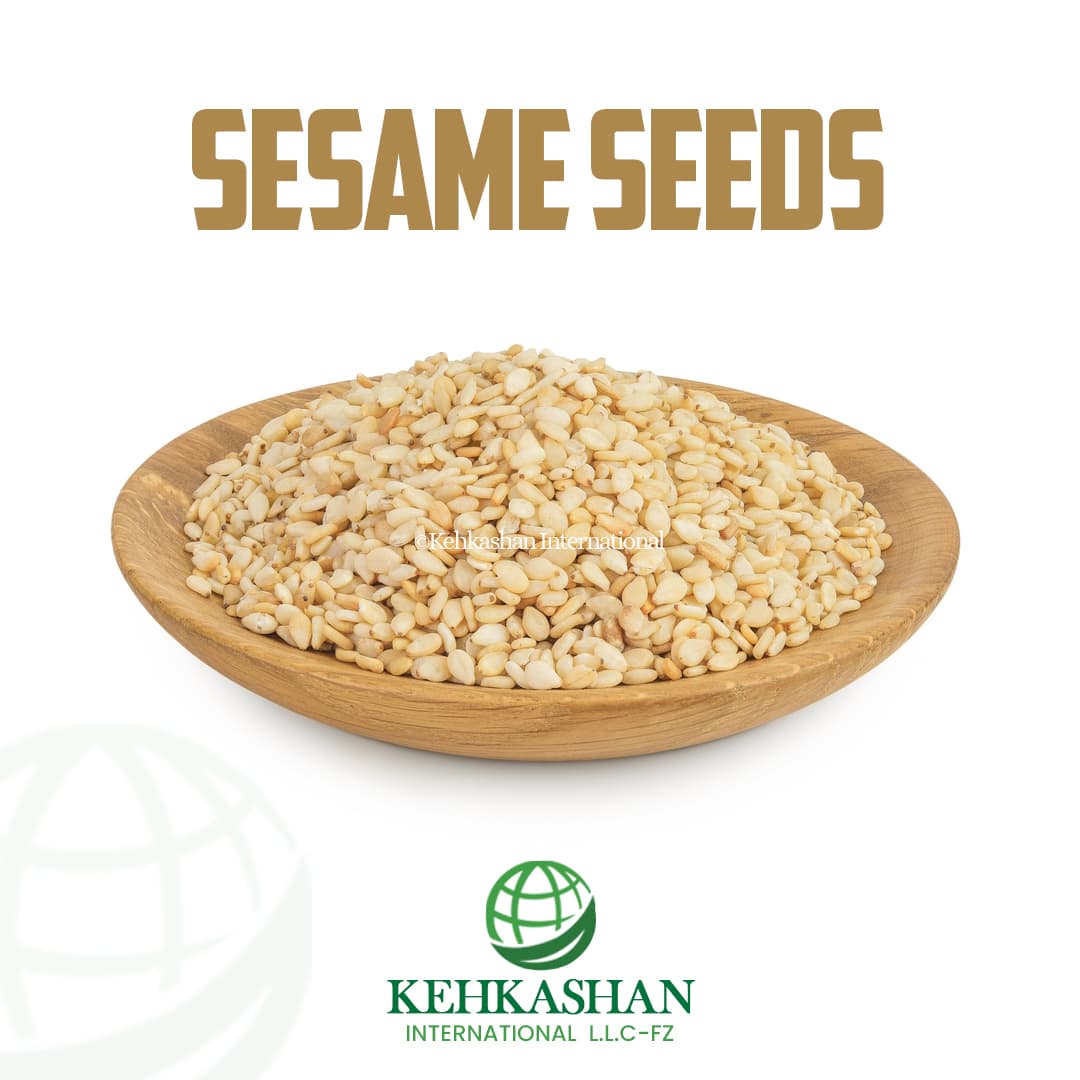
Oilseeds. Sesame (Sesamum indicum), rape and mustard, linseed (Linum usitatissimum), and sunflower (Helianthus annuus). See /insights/sesame-seeds-buyers-guide-2026.
Herbal and medicinal crops. Licorice roots (Glycyrrhiza glabra, wild-collected from Sindh and Balochistan), damask rose (Rosa damascena, dried-flower export from Punjab cultivation), sea buckthorn berries (Hippophae rhamnoides, from Hunza and Gilgit-Baltistan), psyllium husk (Plantago ovata), and a broad library of medicinal herbs from the Northern Areas. See /insights/licorice-roots-buyers-guide-2026, /insights/dried-rose-flowers-buyers-guide-2026, and /insights/sea-buckthorn-berries-buyers-guide-2026.
Specialty nuts and dried fruits. Pine nuts (Pinus gerardiana, from the Suleiman Range of Khyber-Pakhtunkhwa and Balochistan), dried apricots (from Hunza and Skardu), almonds, walnuts (mostly domestic but with growing export tier), and a substantial dates trade (Sindh and Balochistan, Aseel and Bagam varieties). See /insights/pakistani-pine-nuts-buyers-guide-2026.
Field crops. Basmati rice (Punjab cultivation, premium export tier), non-basmati rice (cost-competitive with Indian and Vietnamese supply), cotton (raw and ginned), wheat (limited export, mostly domestic), and maize (limited export).
Fresh fruits. Mango (Sindhri, Chaunsa, Anwar Ratol, Langra varieties), kinnow (mandarin), guava, persimmon, and a growing premium-fruit export tier.
Sprouting seeds. Multi-species sprouting-grade material under audited pathogen-control discipline. See /insights/sprouting-seeds-buyers-guide-2026.
Agroclimatic zones and cultivation belts
Pakistan's commercial cultivation belts map roughly to four zones:
Punjab (the canal-irrigated Indus plain, 60 to 70 percent of total agri-export production). The largest cultivation footprint by far, with deep-soil canal-irrigated mixed cropping. Major commercial export crops: basmati rice, wheat, cotton, sugarcane, fenugreek, fennel, sesame, sunflower, alfalfa, Persian clover, Berseem clover, mango (south Punjab), and damask rose (Pattoki and Sheikhupura corridors). Major districts: Lahore, Kasur, Sheikhupura, Gujranwala, Sialkot, Faisalabad, Sahiwal, Multan, Bahawalpur, Rahim Yar Khan, Khanewal.
Sindh (the lower Indus and Tharparkar desert). Subtropical irrigated and arid zones. Major commercial export crops: rice, cotton, sugarcane, mango (Mirpur Khas, Tando Allahyar — including Sindhri variety origin), banana, dates (Khairpur), Berseem clover, sesame, sunflower, and licorice (wild collection from Tharparkar and Sukkur regions). Major districts: Karachi, Hyderabad, Mirpur Khas, Khairpur, Larkana, Sukkur.
Khyber-Pakhtunkhwa (mountain valleys and the Suleiman foothills). Cool-temperate and arid-temperate zones. Major commercial export crops: pine nuts (Pinus gerardiana, from Suleiman Range and Sulaiman Mountains), peaches and apricots, walnuts and almonds (limited export), and a strong vegetable seed multiplication industry. Major districts: Peshawar, Mardan, Charsadda, Swat, Dir, Chitral, Mansehra.
Balochistan and Gilgit-Baltistan (the high-altitude and arid mountain belts). The premium specialty origin for high-altitude crops. Major commercial export crops: pine nuts, sea buckthorn (Hippophae rhamnoides, from Hunza valley), apricots (Hunza, Skardu), licorice (wild collection from Sindh-Balochistan border zones), and a long tail of medicinal herbs from the Karakoram and Hindukush ranges. Major districts: Quetta, Khuzdar, Mastung, Hunza, Skardu, Gilgit.
Ports and logistics infrastructure
Karachi Port (KICT and KPT). Pakistan's primary international port, handling roughly 60 percent of national export tonnage. Connected to global shipping lanes via direct services to GCC, East Africa, EU, US East and West Coasts, Asian and Latin American destinations. Container handling capacity exceeds 4 million TEUs annually.
Port Qasim. Karachi's secondary container port, handling roughly 30 percent of national export tonnage. Specialized in bulk cargo (cement, coal, oil) plus growing container business.
Gwadar Port. Pakistan's western deep-water port on the Arabian Sea coast, developed under the China-Pakistan Economic Corridor (CPEC) program. Increasingly used for Central Asian transit cargo and Gulf-bound shipments. Smaller container volume than Karachi but strategic for landlocked Central Asian buyers.
Inland routing. Cargo from Punjab and KP cultivation moves to Karachi via the National Highway corridor and the Pakistan Railways trunk line. From Sindh, direct trucking to port is the standard. Inland costs from upper Punjab to Karachi run roughly 0.05 to 0.10 USD per kg of cargo.
Free Zone consolidation through Jebel Ali (UAE). For buyers consolidating multi-origin shipments, Kehkashan operates Free Zone routing through Jebel Ali, allowing Pakistani-origin material to be combined with Iranian, Egyptian, Indian, or other origin lots under a single Letter of Credit and Bill of Lading. This is particularly important for buyers serving sanctions-sensitive corridors or mixing premium origins.
Phytosanitary and regulatory regime
Pakistan's agricultural export regulatory infrastructure includes:
Department of Plant Protection (DPP). Federal agency under the Ministry of National Food Security and Research. Issues phytosanitary certificates for all plant-product exports, conducts pre-shipment inspections, and maintains the National Plant Quarantine list. Buyers can verify exporter registration status against the DPP exporter directory and confirm IPPC-compliant ePhyto issuance.
Pakistan Standards and Quality Control Authority (PSQCA). Issues quality-conformance certificates for food and agricultural exports. Mandatory for many destinations and standard for premium-tier supply.
Ministry of Commerce — Trade Development Authority of Pakistan (TDAP). Issues commercial certifications and supports export-market-access programs, publishing annual export-sector statistics by HS code and destination.
Pakistan Chamber of Commerce and Industry (FPCCI) and provincial chambers. Issue Certificates of Origin and Form A / EUR.1 origin certificates where preferential tariff agreements apply.
ISO 9001:2015, FSSC 22000, and HACCP certified suppliers. Premium export-tier suppliers maintain international quality management certification with annual third-party audit. Kehkashan operates against ISO 9001:2015 with documented procedures.
For EU-destined shipments, EU Regulation 1881/2006 (mycotoxins), 396/2005 (pesticide residues), and the EU-organic Regulation 2018/848 (where applicable) apply on top of the Pakistani export regime.
For Saudi Arabian destinations, SASO (Saudi Standards) certification is mandatory for many crop categories — particularly forage seeds, sprouting seeds, and processed food inputs.
Supplier-due-diligence framework — separating credible exporters from marketplace listings
The international buyer's primary risk in Pakistani sourcing is not the supply itself but the supplier-side documentation discipline. Many marketplace listings are aggregators with no direct cooperative relationships, no quality-control infrastructure, and no consistent specification documentation. The differentiators between credible suppliers and aggregator listings are:
Cooperative or farm-block traceability. A credible exporter can produce GPS coordinates or named cooperative for the lot being offered. Marketplace aggregators typically cannot.
Lab certification from internationally recognized labs. SGS, Bureau Veritas, Intertek, Eurofins. Lot-level testing of moisture, foreign matter, pesticide residue, heavy metals, and crop-specific markers (oil content, glycyrrhizin, thymoquinone, anethole, etc.) — not just generic broker certificates.
Quality management system certification. ISO 9001:2015, FSSC 22000, HACCP, BRC, SQF — at least one international quality management certification with documented annual audit.
Multi-year shipment consistency. A supplier who can deliver the same specification across four annual shipments is the supplier you want for a standardized program. New suppliers should be tested with sample-then-LCL-then-FCL escalation.
Physical export track record. Pakistani Customs export data (PRAL Wbms / Pakistan Single Window export records) is publicly accessible by importer name. A credible exporter's name appears in multi-year, multi-destination export records — not just on a website with no shipment history.
We document each of these on every Kehkashan shipment. Sample lots of 250g to 5 kg are couriered free of freight to qualified buyers worldwide; the sample fee credits against the first PO on acceptance.
Pakistani-origin pricing competitive position vs alternatives
Across the export-grade product portfolio, Pakistani-origin pricing typically runs 15 to 30 percent below the equivalent Indian premium-tier supply, 10 to 25 percent below Egyptian supply (where applicable), and 30 to 50 percent below US, EU, or Australian supply (for forage and specialty seeds where those origins are dominant) — observable in ITC Trade Map bilateral unit-value comparisons by HS code. The pricing gap reflects:
- Lower input costs — agricultural inputs (urea, DAP, potash, agrochemicals) are domestically subsidized through the Pakistani agriculture-support program, reducing on-farm production costs.
- Lower farm-labor costs — agricultural labor in Pakistan runs roughly USD 7 to 12 per day equivalent vs USD 12 to 18 for India and substantially higher for Egypt and Türkiye.
- Lower processing and grading capital costs — Pakistani sortex grading, hulling, and packaging operations run at lower equipment depreciation and labor cost than EU and US equivalents.
- Domestic-currency depreciation — the Pakistani rupee has depreciated against the US dollar by roughly 40 percent over the past 5 years, which is reflected in FOB pricing competitiveness.
The pricing gap is sustained, not transient. Pakistani-origin sourcing is structurally cost-competitive against the major alternative origins for the products where Pakistan competes.
When to source from Pakistan vs alternatives
Sourcing from Pakistan is the clear right choice when: the buyer needs cost-competitive supply at standard quality grade (Persian clover, Berseem, fenugreek, fennel, sesame, black seed); the buyer needs a specialty origin for crops where Pakistan dominates (pine nuts from Suleiman Range, sea buckthorn from Hunza, dried damask rose from Punjab cultivation, licorice from Sindh-Balochistan wild collection); or the buyer needs Free Zone routing for sanctions-sensitive corridors.
Alternative origins may be the right choice when: the buyer requires premium-tier specifications that only specific origins consistently deliver (Ethiopian Humera sesame for Japanese tahini, Bulgarian Kazanlak rose oil, Indian Lucknow sweet fennel, US Pacific Northwest hybrid alfalfa, Mongolian and Russian-Altai sea buckthorn for clinical-grade omega-7); or the buyer's destination market has specific origin restrictions (US Department of Agriculture restrictions on certain Pakistani plant products, occasional EU phytosanitary restrictions on specific commodities).
For buyers running multi-origin programs, Pakistani supply is typically the cost-competitive baseline tier complemented with premium-origin specialty supply for niche specifications.
Trade desk closing note
Pakistan is one of those origins where the supplier's relationship discipline matters more than the country brand. The country produces export-grade material across roughly 30 distinct crop categories at structurally cost-competitive pricing, but the buyer needs a supplier with cooperative-level traceability, internationally-recognized lab certification, and multi-year shipment consistency to capture that pricing without the documentation risk that plagues marketplace listings.
We work with cooperatives across Punjab (Pattoki, Sheikhupura, Faisalabad, Multan, Bahawalpur, Sialkot, Gujranwala), Sindh (Mirpur Khas, Khairpur, Larkana), Khyber-Pakhtunkhwa (Mardan, Charsadda, the Suleiman Range), Balochistan (the Sulaiman Mountains, Tharparkar border zones), and Gilgit-Baltistan (Hunza valley, Skardu corridor). For specific crop-level RFQs, see the linked product pillars or send specifications to [email protected].
The trade desk replies within one working day with FOB Karachi or Free Zone Jebel Ali consolidation, CFR your-destination-port, CIF, and DAP options.


