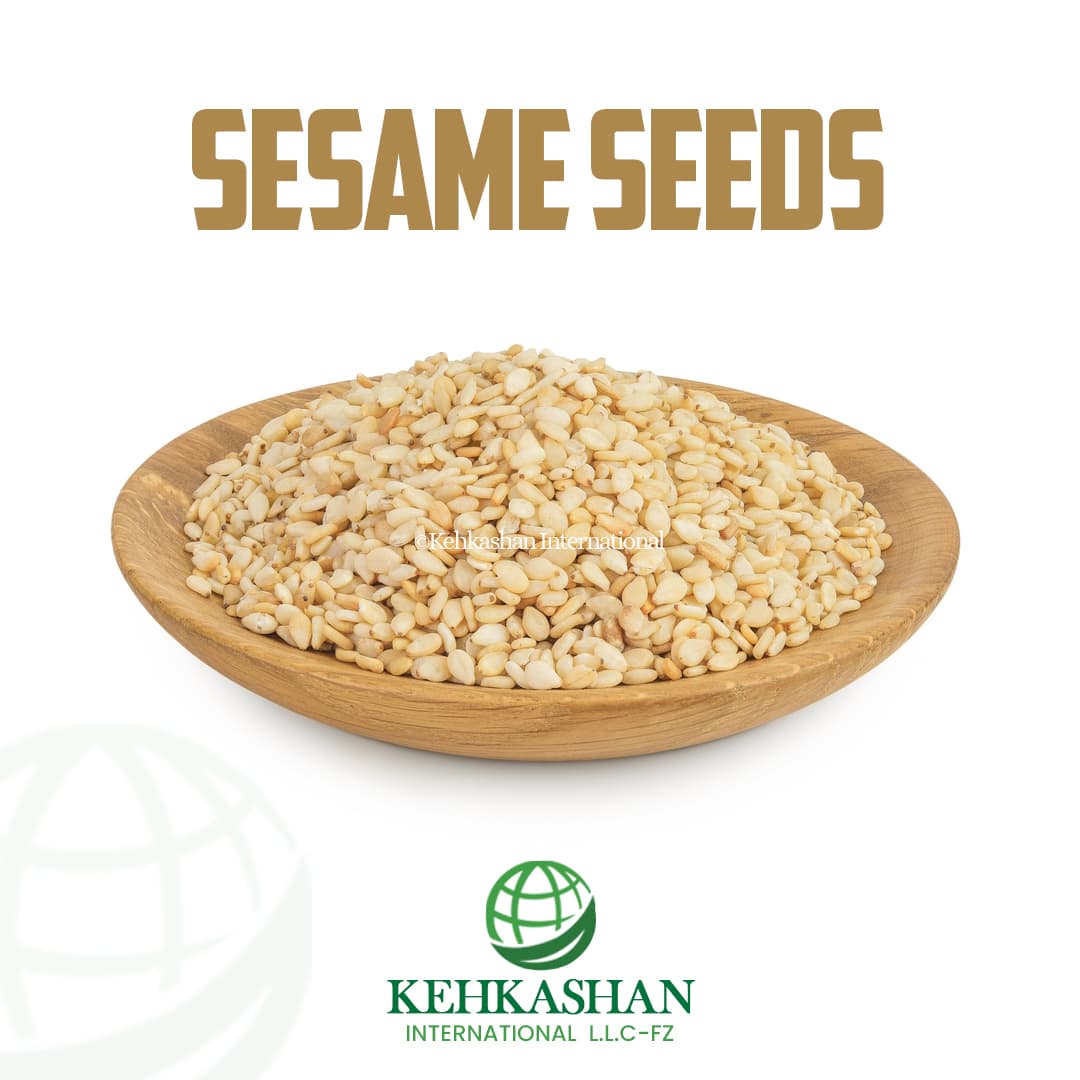
Ethiopian Humera sesame is the global premium tier for tahini and Japanese bakery. Sudanese sesame ranks second-tier with high oil content. Pakistani sesame matches Sudanese quality at 15 to 25 percent lower FOB pricing. Indian sesame offers the broadest variety library (white, brown, black) with cost-competitive pricing across multiple grade tiers.
Why origin selection drives sesame margin more than any other variable
Sesame is the third-largest oilseed in the global export trade per FAOSTAT production statistics, and the four primary origins (Ethiopia, Sudan, Pakistan, India) deliver materially different product attributes that map onto materially different end-use channels. The commercial reality: the Ethiopian Humera sesame that a Japanese bakery brand pays 3.10 USD/kg FOB for is structurally different from the Sudanese sesame at 2.20 USD/kg, which is structurally different from the Pakistani sesame at 1.80 USD/kg, which is different again from the Indian Saurashtra at 1.90 USD/kg. The differences are real and quantifiable — color, flavor, oil content, sortex grade availability, aflatoxin risk profile, and harvest-window predictability all vary by origin.
This guide walks through the four primary export origins side-by-side, with the trade-desk perspective on which origin to source from for which end-use channel. For the general sesame buyer's guide, see /insights/sesame-seeds-buyers-guide-2026. For the optical-sortex grading deep-dive, see /insights/sortex-grade-sesame-seeds-margin-impact.
The four origins side-by-side
Ethiopian Humera (and Wollega) sesame
Geography and harvest. Concentrated in the Humera lowlands of Western Tigray and the Wollega zone of Western Ethiopia. Altitude 500 to 800 meters, distinct dry-season and rain-season cycle, harvest October through January. The Humera variety (a regional landrace) is the reference origin for premium tahini and Japanese bakery worldwide.
Product attributes. Bright white seed color, plump kernel, intensely sweet flavor profile, oil content 53 to 56 percent. Sortex grade availability: 99 percent, 99.5 percent, and 99.95 percent (the premium tier).
Commercial position. The premium-tier origin globally. EU bakery, Israeli, Turkish and Greek tahini and halva manufacturers pay top-band pricing for Humera sesame. Japanese bakery and confectionery brands pay even higher for selected lots.
Logistics. Ships from Djibouti port. Ocean transit to Hamburg 21 to 28 days, to New York 28 to 35 days, to Tokyo 24 to 30 days, to Mersin 12 to 16 days.
FOB pricing band 2026 (indicative). White natural 99% sortex 2.30-2.80 USD/kg. White natural 99.95% sortex 2.70-3.30 USD/kg. Hulled premium 3.10-3.80 USD/kg.
Risk profile. Geopolitical risk from Tigray-region instability has caused supply disruption in 2020-2024, with substantial pricing volatility. EU aflatoxin compliance generally good but lot-variable. Buyers running standardized retail or food-industrial programs against guaranteed Humera spec typically maintain a backup origin in their supplier panel.
Sudanese sesame
Geography and harvest. Historically the largest single-origin producer globally, with cultivation across the Gedaref, Kassala, Blue Nile, Sennar, and White Nile states. Harvest October through January.
Product attributes. Mostly white-natural, oil content 52 to 55 percent, good flavor profile suited to tahini and bakery applications. Sortex grade availability: 99 percent and 99.5 percent are standard, 99.95 percent available from selected processors.
Commercial position. Long-standing reference origin for Middle Eastern tahini and EU bakery. The price-to-quality position for non-Humera premium supply.
Logistics. Ships from Port Sudan. Ocean transit to Hamburg 18 to 24 days, to Mersin 8 to 12 days, to Jeddah 4 to 6 days.
FOB pricing band 2026 (indicative). White natural 99% sortex 2.00-2.50 USD/kg. White natural 99.5% sortex 2.30-2.80 USD/kg. Hulled premium 2.60-3.20 USD/kg.
Risk profile. Substantial supply-chain disruption since 2023 conflict onset. Pricing volatility and supply unpredictability have driven many buyers to shift toward Pakistani and Indian alternatives. EU aflatoxin compliance generally good but conflict-related processing-discipline disruption has increased lot-variability.
Pakistani sesame
Geography and harvest. Concentrated in Punjab (Multan, Bahawalpur, Rahim Yar Khan, Khanewal) and Sindh. Harvest October through December, harvest-window stability good, agroclimatic conditions consistent year-on-year.
Product attributes. Mostly white-natural with some brown variety availability, oil content 50 to 53 percent, flavor profile suited to Middle Eastern tahini and EU bakery (slightly less sweet than Humera, comparable to Sudanese). Sortex grade availability: 99 percent and 99.5 percent standard, 99.95 percent available from premium processors.
Commercial position. Cost-competitive supply for buyers prioritizing pricing over premium origin. Match Sudanese quality at 15 to 25 percent lower FOB pricing.
Logistics. Ships from Karachi. Ocean transit to Hamburg 21 to 28 days, to New York 28 to 35 days, to Tokyo 24 to 30 days, to Mersin 14 to 18 days.
FOB pricing band 2026 (indicative). White natural 99% sortex 1.40-1.80 USD/kg. White natural 99.5% sortex 1.70-2.20 USD/kg. White natural 99.95% sortex 2.10-2.60 USD/kg. Hulled premium 2.40-3.00 USD/kg.
Risk profile. Stable supply, consistent harvest, no significant geopolitical disruption. EU aflatoxin compliance generally good with growing third-party-lab certification discipline at premium processors. The structural cost advantage is sustained, not transient.
Indian sesame
Geography and harvest. Cultivation across Gujarat (Saurashtra is the major export region), Madhya Pradesh, Rajasthan, Andhra Pradesh, Tamil Nadu, and Karnataka. Indian sesame produces all three commercial color types — white, brown, and black — at substantial export volumes tracked by APEDA HS-1207.40 export data.
Product attributes. White Saurashtra Indian sesame oil content 50 to 53 percent, flavor profile suited to tahini and bakery. Black Indian sesame from Madhya Pradesh and Tamil Nadu serves Korean and Japanese premium-roasted-oil applications. Brown Indian sesame serves Indian-diaspora retail and North African baked goods.
Commercial position. The broadest variety library globally with cost-competitive pricing across all three colors. The default origin for many global tahini and bakery buyers due to scale and variety availability.
Logistics. Ships from Mumbai (Nhava Sheva), Mundra, Kandla, and Tuticorin. Ocean transit to Hamburg 22 to 28 days, to New York 28 to 35 days, to Tokyo 22 to 28 days, to Mersin 14 to 18 days.
FOB pricing band 2026 (indicative). White natural 99% sortex 1.50-1.90 USD/kg. White Saurashtra premium 99.5% sortex 1.90-2.40 USD/kg. White hulled premium 2.30-2.90 USD/kg. Black premium 2.10-2.90 USD/kg. Brown 1.50-2.00 USD/kg.
Risk profile. Stable supply, consistent harvest, multi-region cultivation reduces single-region weather risk. EU aflatoxin compliance generally good but variable across exporters — buyers running tight specs work with named processors with documented track records rather than aggregator listings.
Origin-to-end-use mapping — which origin matches which channel
| End-use channel | Optimal origin | Backup origin | Why |
|---|---|---|---|
| Japanese premium bakery | Ethiopian Humera 99.95% hulled | Indian Saurashtra premium hulled | Color and sweetness profile reference standard; Indian premium hulled is the second-best match |
| Premium European tahini and halva | Ethiopian Humera or Sudanese | Pakistani 99.5% hulled | Humera is reference; Sudanese is second; Pakistani premium hulled at lower FOB delivers comparable taste |
| EU and US bakery industrial (sesame buns, bagels) | Pakistani 99% natural or Sudanese | Indian Saurashtra | Cost-competitive at scale; quality at standard sortex tiers is comparable |
| Middle Eastern after-meal mukhwas industry | Pakistani or Indian white | Either depending on availability | Cost-tier is the priority; quality at standard tiers is comparable |
| Korean and Japanese premium roasted-oil | Indian black premium | Indian Madhya Pradesh black | Black sesame supply is dominated by Indian origin |
| Industrial sesame oil extraction | Pakistani or Indian natural | Either | Cost-tier is the only spec; quality is industrial grade |
| Indian-diaspora retail brands (US, UK, Canada, Australia) | Indian Saurashtra | Pakistani or Sudanese | Origin marketing matters in this channel; brand owners often prefer named-Indian-origin material |
| Mexican confectionery | Mexican domestic (preferred) or Pakistani | Indian | Pricing-sensitivity is high in this channel |
What credible exporters share regardless of origin
Across all four origins, the differentiators between credible suppliers and aggregator listings are the same:
- Color and variety transparency — explicit declaration of botanical variety and origin region (Humera, Saurashtra, Sudanese-natural, Pakistani Multan, etc.) plus a third-party-lab gas-chromatography test where applicable.
- Sortex-grade verification — the optical-sortex grade should be verified by the supplier with a third-party-lab certificate of the percentage of foreign matter and color-defect seeds in the lot, not just declared on the supplier's CoA.
- Aflatoxin testing per lot from internationally recognized labs — SGS, Bureau Veritas, Intertek, Eurofins. Sesame's aflatoxin risk is real and lot-variable across all origins, as documented in repeated EU RASFF notifications on sesame. Suppliers running per-lot lab-certified aflatoxin testing are materially safer than suppliers offering generic origin certificates.
- Hulling-process disclosure where applicable — water-bath hulling can leave residual moisture that drives oxidation and reduces shelf life. Mechanical hulling is the premium method for premium tahini and Japanese bakery tiers.
- Multi-year shipment consistency — a supplier who can deliver the same color, sortex, and aflatoxin-spec consistency across four annual shipments is the supplier you want for a standardized retail or food-industrial program.
When to source from each origin — decision framework
Source Ethiopian Humera when: the end-use channel is Japanese premium bakery, EU premium clean-label retail tahini, or premium herbal-tea brands with explicit origin marketing. Pricing-tolerance is wide (top-band acceptance). Geopolitical risk-tolerance must be present (occasional supply disruption is the trade-off for the top spec band).
Source Sudanese when: the end-use is Middle Eastern tahini and halva at scale with supply continuity through 2024-2026 conflict period, OR EU bakery at premium 99.5% sortex tier. Pricing-tolerance is moderate. Geopolitical risk-tolerance must be present.
Source Pakistani when: the end-use is cost-competitive bakery, mukhwas, halva, or industrial-extraction at scale. Quality at standard 99-99.5% sortex tiers matches Sudanese at materially lower FOB pricing. Supply continuity is reliable. Pricing-tolerance is tight (cost-competitive is the spec). The Pakistani origin is also the optimal "second source" for buyers running primary Sudanese or Ethiopian programs that need disruption insurance.
Source Indian when: the end-use requires multiple sesame colors (white + brown + black) under a single supplier relationship, OR Indian-diaspora retail brand-owner preference for named-Indian origin, OR the Indian Saurashtra premium tier specifically (cost-competitive against Humera at slightly lower flavor band).
Multi-origin sourcing through Free Zone consolidation
For buyers running multi-origin programs (typically EU and US tahini, halva, and premium-bakery brands sourcing 5,000 to 50,000 ton annual programs), Free Zone consolidation through Jebel Ali allows Ethiopian, Sudanese, Pakistani, and Indian sesame to be combined under a single Letter of Credit and Bill of Lading. This streamlines the procurement-side documentation and provides a built-in disruption hedge — if any single origin has supply disruption, the program reallocates across the remaining origins without reopening contracts.
We document each origin's provenance separately within the consolidated shipment, with origin-level CoA and aflatoxin testing.
Trade desk closing note
Sesame is one of those commodities where origin selection is the procurement decision with the largest cost impact, and the differentials between the four primary origins are real and worth understanding. We work with consolidator partnerships into all four origins (Ethiopian Humera, Sudanese-natural, Pakistani Punjab cooperatives, Indian Saurashtra) plus Mexican specialty supply for buyers needing it.
For a quote, send the seven RFQ specs (origin preference or open-source, color, hulled or natural, sortex grade tier, aflatoxin tolerance, organic certification yes/no, quantity) to [email protected]. The trade desk replies within one working day with FOB origin-port, CFR your-destination-port, CIF, and DAP options.
For the deep dives, see /insights/sesame-seeds-buyers-guide-2026 (general buyer's guide) and /insights/sortex-grade-sesame-seeds-margin-impact (optical sortex grading).


