
Dried rose petals — herbal flagship
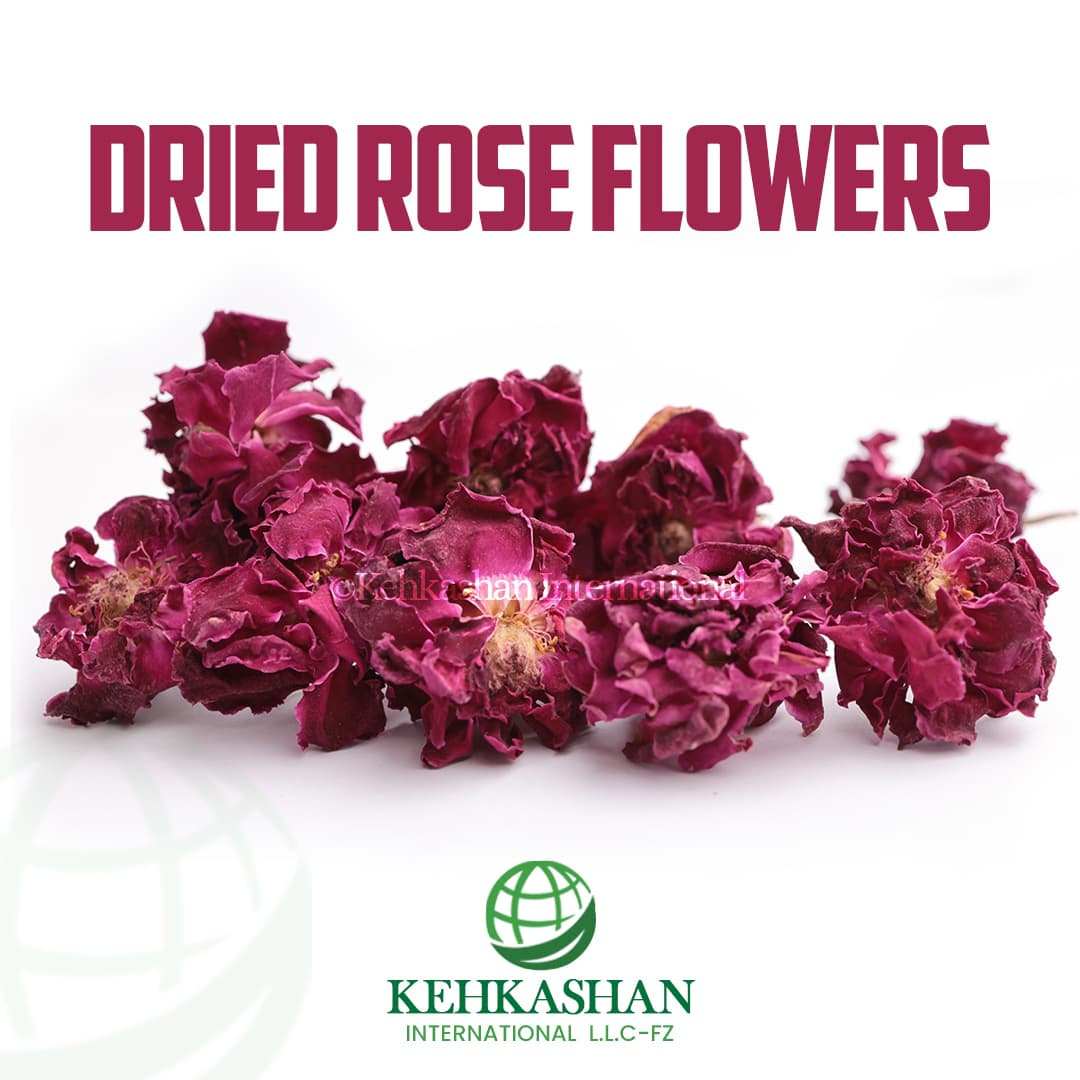
Rose anchors Kehkashan's herbal book at single-product depth. Bulgarian Kazanlak, Iranian Ispahan, Turkish Isparta and Saudi Taifi cover the high end; Indian and Pakistani lots cover gulkand and tea. Variety, origin and grade — attar versus food versus cosmetic — drive pricing on every RFQ.
Top buying countries
Saudi Arabia and the UAE lead Gulf gulkand, attar and rose-tea demand. Türkiye and France buy for cosmetic and absolute extraction. The United States, Germany and Japan import for tea and natural-fragrance lines. India and Pakistan re-export domestic gulkand. Russia takes Iranian and Turkish lots.
Key varieties to know
Rosa damascena is the Damask species — Bulgarian Kazanlak, Iranian Ispahan, Turkish Isparta, Saudi Taifi. Rosa centifolia is the cabbage rose used in Indian and French gulkand. Rosa gallica is the apothecary rose. Each ships with origin certification, moisture under 10% and a hand-picked food-grade label.
Logistics overview
Dried rose ships from Jebel Ali in 10 kg or 25 kg cartons with food-grade liner, 8 to 10 metric tonnes per 20-foot container by flower density. Lead time runs 14 to 28 days from PO confirmation, longer in pre-harvest months. Cool-chain is unnecessary; dry storage at moisture under 10% is the norm.
Quality assurance protocol
Every rose lot ships hand-sorted, food-grade, moisture under 10% and visually graded for petal intactness, color (pink to deep red by variety) and aroma. Cosmetic and attar buyers may request a third-party gas-chromatography report on volatile-oil profile. Counter-sampling is welcome at vessel loading.
Sourcing mix and origin discipline
Bulgaria carries Kazanlak through the Rose Valley cooperative book. Iran ships from Kashan. Türkiye ships from Isparta. Saudi Arabia ships niche Taifi from Wadi Bani Malik on inquiry. India and Pakistan back-fill on gulkand-grade R. centifolia. Multi-origin consolidation is the default on a 500 kg starter.
Pricing tiers driven by origin and grade
Bulgarian Kazanlak prices above Iranian Ispahan, which prices above Turkish Isparta, which prices above Indian and Pakistani gulkand-grade. Saudi Taifi sits at the top of the curve as a niche premium. Attar-grade whole flower carries a higher premium than culinary petal. Cosmetic-grade and tea-grade price between attar and gulkand.
Buyer profiles we serve
Saudi and Emirati attar distillers buy Bulgarian and Iranian whole flower at 200 to 500 kg per harvest cycle. French and Turkish cosmetic houses buy Bulgarian Kazanlak. American and Japanese tea blenders buy 25 kg cartons. Indian and Pakistani gulkand makers buy R. centifolia and damascena in mixed-origin lots monthly.
Sample-first policy on dried rose
Every new rose programme starts with a 200 to 500 g courier sample of each origin grade — petal versus whole flower — and a moisture and visual-grading note. Cosmetic and attar buyers run their own gas-chromatography confirmation. Sample fees credit against the first carton order. Pre-harvest contracts secure November onwards delivery.