Paliers MOQ
| Palier | Quantité | Note |
|---|---|---|
| Trial | 300 kg LCL | — |
| Commercial | 1–5 MT LCL | — |
| FCL | 1 × 20'FCL ≈ 4–6 MT (low-density) | — |
Kehkashan exports dried rose flowers and petals (Rosa damascena) from origin partners in Pakistan, Iran, Bulgaria, and Türkiye — supplied in bulk FCL or LCL with FOB Jebel Ali, CFR, or CIF terms to herbal-tea blenders, cosmetic formulators, and traditional-medicine buyers across 80+ destinations.
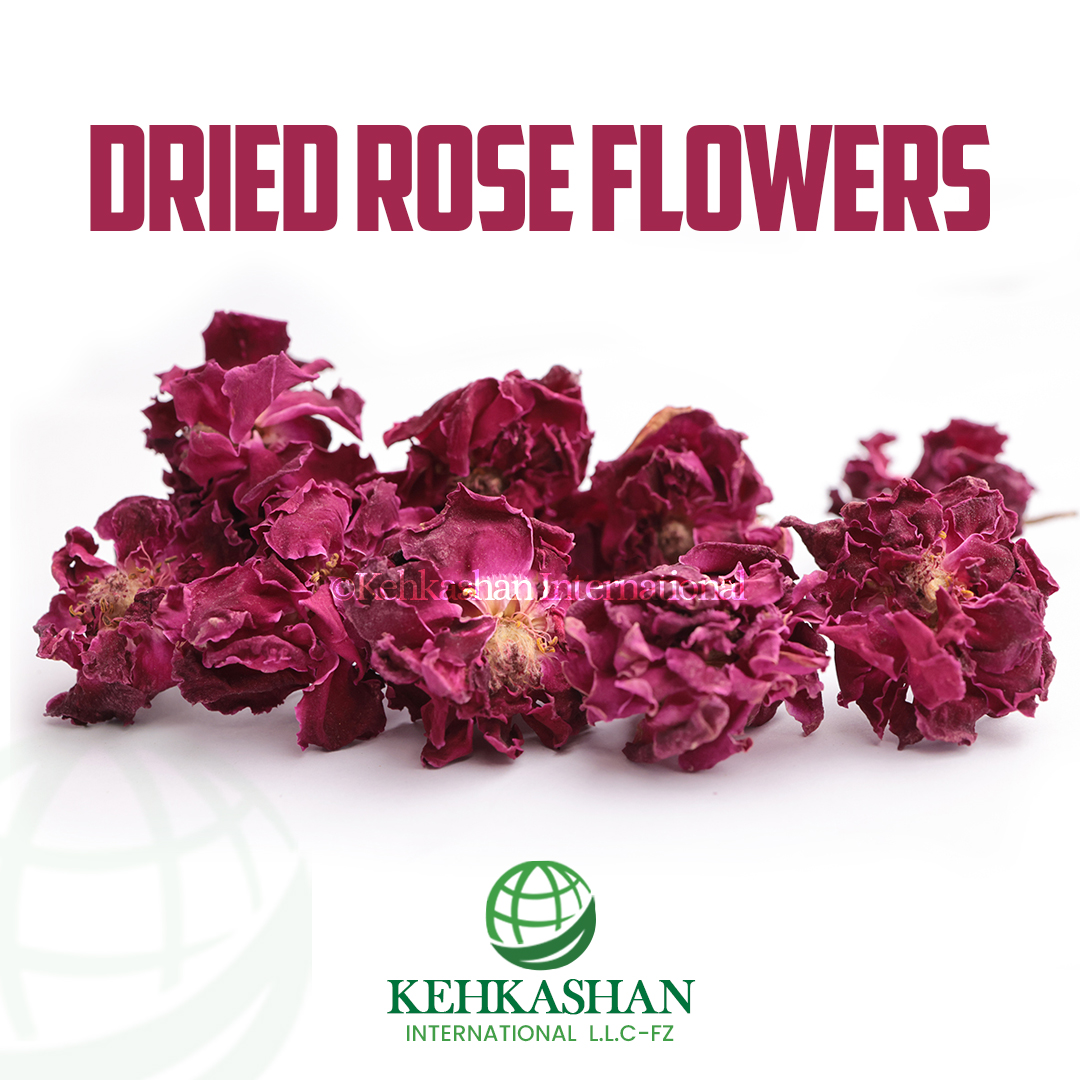
Reference image. Sample lots and product-specific photography available on RFQ.
| Palier | Quantité | Note |
|---|---|---|
| Trial | 300 kg LCL | — |
| Commercial | 1–5 MT LCL | — |
| FCL | 1 × 20'FCL ≈ 4–6 MT (low-density) | — |
| Grade | Fourchette indicative |
|---|---|
| Pakistani / Iranian Damask (whole flower) | RFQ — mid tier |
| Bulgarian Kazanlak Damask (premium) | RFQ — top tier |
| Turkish Isparta (mid) | RFQ — mid tier |
| Petals only (tea blenders) | RFQ — entry tier |
| Port de déchargement | Transit | Incoterm |
|---|---|---|
| Karachi (FOB) | 0 days | FOB |
| Jebel Ali (UAE) | 4–6 days | CFR / CIF |
| Burgas (Bulgaria, FOB) | 0 days | FOB |
| Hamburg (Germany) | 21–28 days | CFR / CIF |
| New York (USA) | 28–35 days | CFR / CIF |
Chaque conteneur quitte la zone franche des EAU avec le pack documentaire ci-dessous. Des certificats supplémentaires (Halal, SASO, BRC, bio, FairWild, etc.) sont ajoutés sur demande avant le chargement.
Damask rose is dried at Pattoki and Sheikhupura in Punjab, Kashan in Iran, Kazanlak in Bulgaria, Isparta in Türkiye, and Taif in Saudi Arabia. European tea blenders pay for Kazanlak shade-dried buds. Gulf sweet makers and Indian gulkand producers take sun-dried Iranian and Pakistani petals. Attar distillers in Kannauj buy Pakistani whole flower.
Rosa damascena is the oil-bearing species; the Kazanlak clone is trigintipetala, the Saudi clone is Taifi. Rosa centifolia, the Grasse rose de Mai, carries 100 pale petals and lower oil. Rosa gallica is the apothecary rose used in Unani preparations. Grades run A-grade closed bud, B-grade opened bud, sorted petals, unsorted petals, and powder.
The COA states botanical species, essential-oil content by hydrodistillation at 0.03 to 0.05 percent for damascena, moisture below 10 percent, foreign matter below 1 percent for tea grade, and a colour grade against a reference photo. Aflatoxin, ochratoxin A, lead, cadmium, and sulphur dioxide residue are reported. Distillate samples match ISO 3517 GC profiles.
Herbal tea blenders in Germany, the United Kingdom, and Korea take A-grade whole bud for infusions. Attar and rose-water distillers in Kannauj and Taif buy whole flower. Gulkand makers in Pune and Gulf confectioners use sorted petals in preserves and ma'amoul garnish. Cosmetic formulators specify shade-dried petals for bath salts, clay masks, and infusions.
Pakistani rose reaches Jebel Ali from Karachi in 4 to 6 days; Bulgarian lots load at Burgas. From Jebel Ali, transit is 5 to 8 days to Jeddah, 21 to 28 days to Hamburg or Busan, and 28 to 35 days to New York. Cartons ship ambient with desiccant; premium buds may go nitrogen-flushed.
Rose is quoted against an RFQ as FOB Karachi, FOB Jebel Ali, CFR, or CIF destination. Price moves on origin (Kazanlak above Isparta above Kashan and Punjab), format from A-grade bud to unsorted petal, sulphur-free processing, months since May-to-June harvest, and pallet count. Freight is a large share of landed cost because the cargo is light.
A 250 gram to 1 kilogram sample from the sealed lot ships with a draft COA. Tea and cosmetic buyers run pesticide and heavy-metal panels at Eurofins or SGS before approval. Bulgarian-priced lots are verified by GC-MS on a sample drawn at loading. Proforma then LC at sight or TT; loading is photographed.
Dried rose cubes out before it weighs out. A 20-foot FCL takes 4 to 6 metric tonnes of loose whole bud in 10 kilogram cartons, 9 to 11 tonnes of petals, or 12 to 14 tonnes of powder. A 40-foot high-cube doubles those figures. LCL from 300 kilograms consolidates at Jebel Ali.
EU tea-grade rose enters under HS 1211.90 against EC 1881/2006 contaminant limits, pesticide MRL annexes, and a fumigation certificate; nitrogen-flushed lots need a non-irradiation declaration. United States buyers register the foreign supplier under FSMA FSVP and file FDA prior notice. Saudi SFDA requires a health certificate, an attested invoice, and Arabic labelling.
Réponses aux questions les plus fréquentes posées par les acheteurs lors d'un RFQ ou d'une évaluation d'expédition d'essai.
Guides détaillés rédigés par le bureau commercial Kehkashan pour les acheteurs et les équipes achats — arbitrages d'origine, codes variétés et flux documentaires.
trade brief
A-grade dried Rosa damascena petals & buds from Pakistan, Iran, Bulgaria, Turkiye, Morocco. Oil content, color grades, EU-compliant. FOB Jebel Ali, samples on RFQ.
origin report
Origin geography, oil yield, drying methods and grading for Kazanlak Valley vs Ispahan damask rose petals — and how Free Zone routing reconciles sanctions.
Principales destinations
Produits associés
Du bureau commercial
Réponse au RFQ sous 24 heures. FOB Jebel Ali, CFR, CIF ou DAP. LC at sight, TT ou DP.
Expédition depuis Jebel Ali. Délai 14–21 jours. RFQ sous 24 h.