Aller au contenu
Kehkashan

Graines à germer — Exportateur et fournisseur grossiste — 35+ origines, 80+ destinations

Kehkashan exports food-grade sprouting seeds — alfalfa, broccoli, mung, and lentil — from origin partners in Pakistan, the USA, and Italy, supplied in bulk FCL or LCL with FOB Jebel Ali, CFR, or CIF terms to clean-eating retail and natural-food buyers across 80+ destinations.
  • 35+ origines
  • 80+ destinations
  • Certifié ISTA / OCDE
  • LC at sight (USD/EUR)
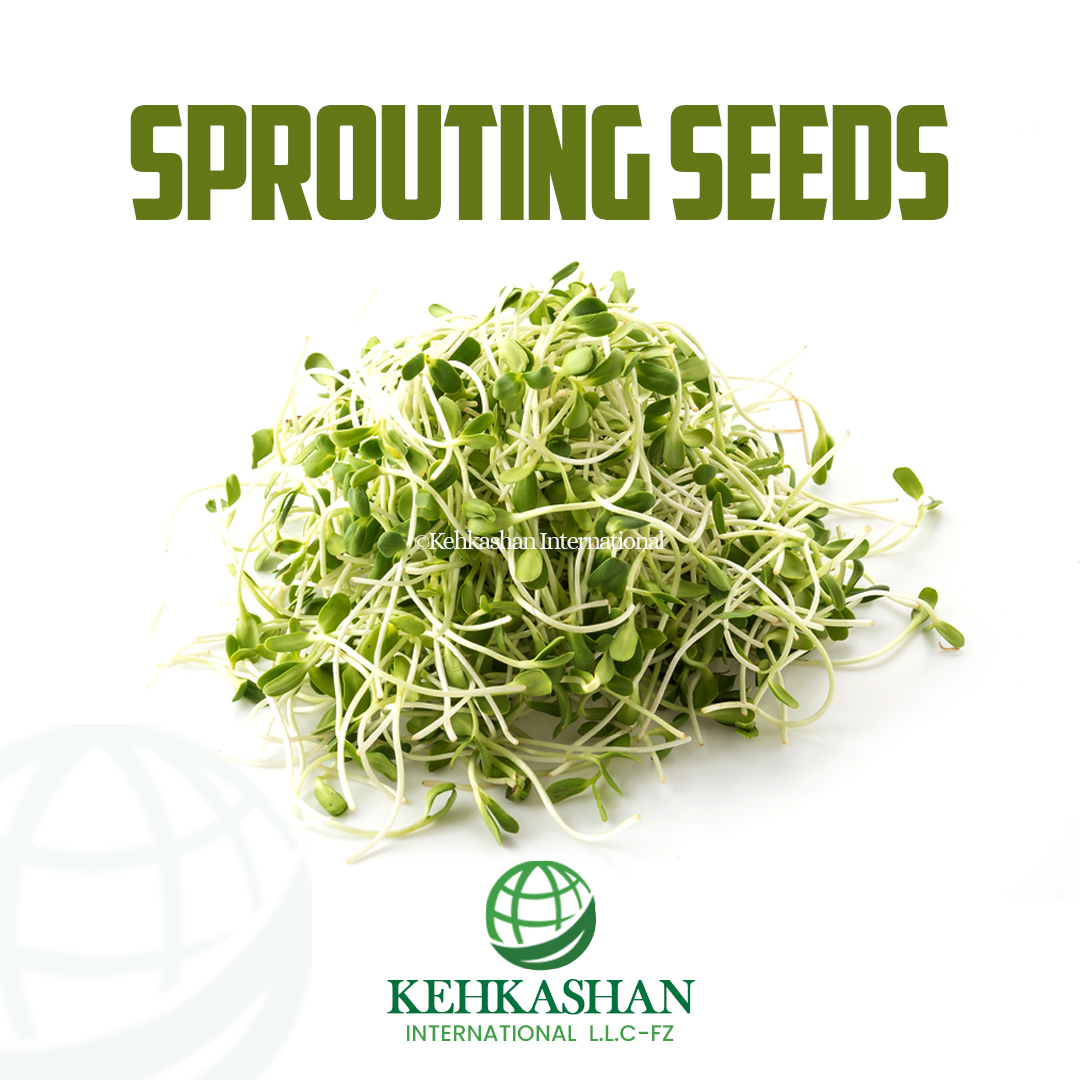
Graines à germer — photo du produit Kehkashan International

Reference image. Sample lots and product-specific photography available on RFQ.

Faits clés

Nom scientifique
—
Autres appellations
Mung sprouts, بذور الاستنبات, семена для проращивания
Code SH
—
Variétés courantes
Mung bean, Alfalfa sprout, Broccoli sprout, Radish sprout
Origines disponibles
India, Pakistan, Australia
MOQ
1 MT starter
Conditionnements
25 kg PP bag
Spécifications
Purity: 99%, Germination: 90% min, Salmonella: Negative
Délai
10–18 jours après confirmation du PO
Incoterms
FOB Jebel Ali · CFR · CIF · DAP
Conditions de paiement
LC at sight · TT · DP

Spécifications et calcul du conteneur

Paliers MOQ

PalierQuantitéNote
Trial500 kg LCL—
Standard FCL1 × 20'FCL ≈ 22 MT—
Programme5–15 × 20'FCL / year—

Bandes de prix FOB (sur demande)

GradeFourchette indicative
Mung / lentil / chickpea sproutingRFQ — entry tier
Alfalfa / clover sproutingRFQ — mid tier
Broccoli / radish / mustard (microgreen)RFQ — premium tier

Délais — principales destinations

Port de déchargementTransitIncoterm
Karachi (Pakistan, FOB)0 daysFOB
Jebel Ali (UAE)4–6 daysCFR / CIF
Jeddah Islamic Port (KSA)8–12 daysCFR / CIF
Dammam (KSA)7–10 daysCFR / CIF
Mombasa (Kenya)14–20 daysCFR / CIF
Formats d'emballage
25 kg PP bag (food-grade liner)
Capacité du conteneur
20'FCL: 22 MT

Jeu documentaire par expédition

Chaque conteneur quitte la zone franche des EAU avec le pack documentaire ci-dessous. Des certificats supplémentaires (Halal, SASO, BRC, bio, FairWild, etc.) sont ajoutés sur demande avant le chargement.

  1. Bill of Lading (BL) — original 3/3 set
  2. Commercial Invoice — UAE Free Zone issued
  3. Packing List with lot codes
  4. Certificate of Origin (CoO) — Dubai Chamber attested
  5. Phytosanitary Certificate — origin NPPO
  6. Salmonella negative test (25 g spec, EU / FDA)
  7. E. coli O157:H7 negative test (where required)
  8. Listeria absent in 25 g (food-grade)
  9. Total plate count, yeast, mould
  10. Fumigation Certificate

Questions des équipes achats

Réponses aux questions les plus fréquentes posées par les acheteurs lors d'un RFQ ou d'une évaluation d'expédition d'essai.

Why is sprouting-grade seed different from agriculture-grade?
Sprouting seed must meet food-safety standards (Salmonella absent in 25 g, E. coli O157:H7 absent, Listeria absent in 25 g) because consumers eat the sprouts raw. Agriculture-grade seed has no microbiological spec because it gets planted, not eaten. Sprouting seed costs 30–60% more, ships in food-grade liners, and carries extended microbiological COA. Never substitute agriculture-grade for sprouting use.
What is the typical Salmonella incidence and how is it managed?
Industry data shows 0.1–0.3% Salmonella detection rate in untested raw seed lots. We test every export-bound lot at an ILAC-accredited origin lab and reject any positive lot. Steam-pasteurised lots (DriedFresh or comparable HACCP-validated process) further reduce risk; some buyers (US, EU sprouters) require steam-pasteurised seed by regulation. We supply both raw-tested and steam-pasteurised on request.
Mung sprouting versus alfalfa sprouting — different markets?
Mung-bean sprouts are the high-volume Asian / GCC retail product (bean-sprouts in Chinese / Thai cuisine, GCC Indian / Pakistani diaspora retail). Alfalfa sprouts are the Western salad-bar and clean-eating product. Broccoli microgreens are the premium nutraceutical-marketing tier (sulforaphane content). Different markets, different price tiers, different packaging — specify clearly on PO.
What is the seed-to-sprout multiplier?
Mung beans: 1 kg seed yields 6–8 kg fresh sprouts in 4 days. Alfalfa: 1 kg seed yields 8–10 kg microgreens in 6–8 days. Broccoli: 1 kg seed yields 6–8 kg microgreens in 7–10 days. Buyers planning sprouting facility throughput size their seed purchasing against weekly retail-pack demand and multiplier ratio.
Can you supply organic-certified sprouting seed?
Yes — USDA Organic, EU Organic (ECOCERT), and Halal-certified sprouting lots are available for alfalfa, broccoli, mung, and lentil. Premium 25–40% over conventional. MOQ 1 MT minimum for organic-track. Documentation includes the organic-cert plus the standard food-safety microbiological panel.

Guides détaillés rédigés par le bureau commercial Kehkashan pour les acheteurs et les équipes achats — arbitrages d'origine, codes variétés et flux documentaires.

Origines, marchés et produits associés

Demandez dès aujourd'hui un devis pour un 20'FCL de luzerne

Réponse au RFQ sous 24 heures. FOB Jebel Ali, CFR, CIF ou DAP. LC at sight, TT ou DP.

Demander un devisWhatsApp

Expédition depuis Jebel Ali. Délai 14–21 jours. RFQ sous 24 h.